


 [ Libra NëLinjë ]
 Isuf B. Bajrami
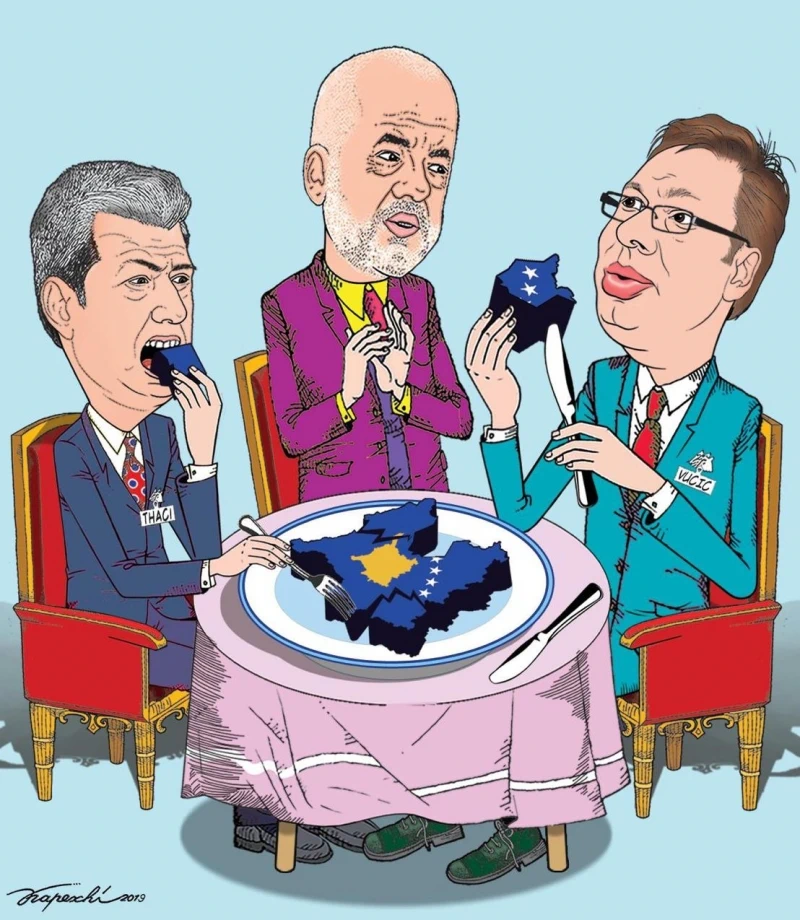
Roli i Beogradit, Procesi i Berlinit, Kosova dhe Interesi rus
Parathënie
Ky studim shqyrton dinamikën strategjike të iniciativës Open Balkan, duke u fokusuar tek roli qendror i Beogradit, minimizimi i Procesit të Berlinit, sfidat për Kosovën dhe përfshirja e Rusisë. Open Balkan, si projekt bashkëpunimi ekonomik rajonal mes Shqipërisë, Serbisë dhe Maqedonisë së Veriut, shkon përtej integrimit ekonomik; ai shërben si një mjet politik në balancën e fuqive rajonale. Duke analizuar vazhdimësinë historike, bashkëpunimet bilaterale dhe reagimet ndërkombëtare, ky punim evidenton se si iniciativa rajonale mund të sfidojnë proceset zyrtare të BE-së dhe të riformësojnë hierarkitë politike dhe ekonomike në Ballkanin Perëndimor.
1. Origjina dhe karakteristikat themelore
Open Balkan është një iniciativë rajonale e tre vendeve të Ballkanit Perëndimor — Shqipëri, Serbi dhe Maqedoni e Veriut — e ndërtuar për të krijuar një treg të përbashkët ekonomik me lëvizje të lirë të mallrave, shërbimeve, kapitalit dhe njerëzve. Dokumentet nënshkruese në Shkup (2019) dhe Novi Sad (2020) përfshijnë mekanizma për harmonizimin e doganave dhe lehtësimin e qarkullimit të punësuesve dhe mallrave [1][2].
Përveç aspektit ekonomik, qendra operative në Beograd i jep Serbisë një rol vendimmarrës dhe avantazh politik. Kjo qendër bëhet instrumenti kryesor për vendimmarrje strategjike rajonale, duke e kthyer Open Balkan nga një projekt ekonomik në një mekanizëm politiko-ekonomik me ndikim mbi vendet më të vogla, veçanërisht Kosovën [3].
2. Qëllimet zyrtare dhe tensionet me proceset e BE-së
a. Qëllimet zyrtare
• Lëvizje e lirë e mallrave, shërbimeve dhe njerëzve
• Bashkëpunim ekonomik rajonal dhe stabilitet financiar
• Hapësirë për integrim gradual ekonomik që mund të shërbejë si “steg drejt BE-së” [4]
b. Tensioni me Procesin e Berlinit
Procesi i Berlinit është iniciativa zyrtare e BE-së për Ballkanin Perëndimor, e fokusuar në:
• Zhvillim të infrastrukturës rajonale
• Forcim të sundimit të ligjit dhe standardeve demokratike
• Integrim gradual në BE me monitorim të mekanizmave zyrtar [5]
Open Balkan, duke funksionuar jashtë këtyre mekanizmave, krijon një strukturë paraleliste:
1. Minimizon autoritetin e BE-së dhe vendimet e marra për rajonin
2. Përqendron vendimmarrjen në Beograd, duke i dhënë Serbisë rol dominues
3. Krijon një hapësirë alternative që sfidon autoritetin e Berlinit [6]
Shembuj praktikë: Projektet infrastrukturore rajonale të Open Balkan (rrugë, energjetikë, telekomunikacion) shpesh miratohen pa konsultim të plotë me BE-në, duke krijuar një avantazh strukturor për Serbinë [7].
3. Roli i Beogradit si qendër vendimmarrjeje dhe instrument politik
• Beogradi funksionon si qendër strategjike, ku vendimet kryesore për zhvillimin ekonomik dhe bashkëpunimin politik rajonal merren me prioritet për Serbinë [8]
• Zhvillimi i projekteve rajonale përfshin shpesh elemente që rrisin ndikimin e Beogradit mbi Shqipërinë, Maqedoninë e Veriut dhe, në mënyrë indirekte, mbi Kosovën [9]
• Kjo pozicionon Beogradin jo vetëm si qendër ekonomike, por edhe si aktor politik që sfidon mekanizmat zyrtarë të BE-së dhe Procesin e Berlinit [10]
Shembuj konkretë: Koordinimi i politikave fiskale dhe tarifave doganore midis Serbisë dhe Shqipërisë brenda Open Balkan, pa pjesëmarrjen e vendeve jo-anëtare, lejon Beogradin të diktojë ritmin e integrimit rajonal [11].
4. Minimizimi i Procesit të Berlinit dhe tensionet me BE-në
• Open Balkan krijon strukturë alternative vendimmarrjeje, duke shmangur mekanizmat e BE-së dhe duke vendosur Serbinë si lider rajonal [12]
• Redukton pjesëmarrjen e vendeve më të vogla dhe krijon një ambient ku vendimet nuk reflektojnë konsensusin gjithëpërfshirës që kërkohet nga BE [13]
• Bashkëpunimi ekonomik përdoret si instrument politik: Serbisë i lejohet të avancojë ndikimin pa njohje reciproke dhe pa standarde demokratike të kërkuara nga BE [14]
5. Sfida për Kosovën
• Kosova ka refuzuar pjesëmarrjen në Open Balkan, duke argumentuar se iniciativa është politikisht e dëmshme pa njohje reciproke [15]
• Kushtetuta e Serbisë (Neni 1) e konsideron Kosovën pjesë të pandashme, duke komplikuar çdo pjesëmarrje të saj në iniciativën rajonale [16]
• Strategjia e Serbisë synon të krijojë një realitet de facto ekonomik dhe politik pa njohje ndërkombëtare, duke përdorur Open Balkan si instrument për reduktimin e sovranitetit të Kosovës [17]
6. Tendencat e fundit dhe impakti në marrëdhëniet Rama–Vuçiq
• Implementimi i objektivave fillestare ka ngadalësuar për shkak të tensioneve politike dhe perceptimeve kritike nga vendet jashtë iniciativës [18]
• Rama dhe Vuçiq promovojnë vazhdimisht projektin, duke forcuar pozicionin e Serbisë dhe duke sfiduar mekanizmat zyrtarë të BE-së
• Editoriali i përbashkët në Frankfurter Allgemeine Zeitung (2026) përdoret si instrument politik për legjitimim, duke theksuar bashkëpunimin ekonomik ndaj Kosovës, në kundërshtim me interesat e saj [19]
7. Lidhja historike: Vazhdimësia e strategjisë ndaj Kosovës
a. Esat Pasha (1913–1914)
• Bashkëpunimi me Serbinë për avantazhe personale dhe ndikim mbi Kosovën [20]
b. Marrëveshjet e Pashiqit dhe Zogut
• Shqipëria shpesh përdorej si partner instrumental për politikat rajonale të Serbisë [21]
c. Paralelizmi me Rama–Vuçiq
• Open Balkan dhe editoriali FAZ pasqyrojnë të njëjtën logjikë historike: Shqipëria si partner, Beogradi si qendër vendimmarrëse, Kosova jashtë vendimmarrjes [22]
d. Impakti ndërkombëtar
• Kjo linjë historike rrit shqetësimet e BE-së dhe SHBA-së për realitetet de facto në Kosovë dhe sfidën ndaj Procesit të Berlinit [23]
8. Roli dhe interesat e Rusisë
a. Lidhjet historike dhe strategjike të Serbisë me Rusinë
• Serbia ka një partneritet të ngushtë me Rusinë në fushën e energjisë, politikës dhe sigurisë rajonale [24]
• Rusia ka përdorur ndikimin e saj për të mbështetur pozicionin e Beogradit në çështjet e Kosovës dhe Ballkanit Perëndimor, duke sfiduar mekanizmat zyrtarë të BE-së [25]
b. Open Balkan dhe perspektiva ruse
• Nga perspektiva e Moskës, Open Balkan është një mjet joformal për të zgjeruar ndikimin rus në Ballkan, duke minuar integrimin euro-atlantik dhe duke krijuar hapësirë ku Beogradi vepron si qendër alternative vendimmarrjeje [26]
c. Interesat ekonomike dhe energjetike
• Rusia siguron investime në energji, si linjat e gazit dhe projektet hidroenergjitike, duke e bërë Serbinë të varur nga burimet ruse [27]
• Kjo varësi ekonomike lejon Rusinë të ndikojë politikisht vendimet e Beogradit lidhur me Open Balkan dhe bashkëpunimin rajonal [28]
d. Impakti në Kosovë dhe rajon
• Strategjia ruse përmes Beogradit ruan kontrollin mbi Kosovën dhe Ballkanin Perëndimor në mënyrë indirekte
• Open Balkan mund të shihet si instrument ruse për të sfiduar integrimin euro-atlantik, duke rritur tensionet politike dhe duke reduktuar ndikimin e BE-së dhe SHBA-së [29]
9. Përfundim kritik
• Open Balkan nuk është thjesht ekonomik; është instrument politik i Serbisë, me partnerin e saj Rama në Shqipëri
• Minimizimi i Procesit të Berlinit dhe qendra operative në Beograd sfidojnë autoritetin e BE-së
• Ndikimi rus e forcon këtë dinamikë, duke e kthyer rajonin në një terren ku Sovraniteti i Kosovës dhe integrimi euro-atlantik janë të cenueshëm
• Pjesëmarrja e Kosovës duhet të garantohet me mbikëqyrje ndërkombëtare dhe transparencë për të ruajtur sovranitetin dhe stabilitetin rajonal [30].
Rezyme
Open Balkan është një mekanizëm strategjik rajonal që shkon përtej integrimit ekonomik. Beogradi ka marrë rolin qendror, duke minimizuar ndikimin e Procesit të Berlinit dhe duke vendosur Serbinë si lider rajonal. Kosova, e përjashtuar nga iniciativa, përballet me sfida serioze ndaj sovranitetit dhe zhvillimit ekonomik. Historia dhe bashkëpunimet Rama–Vuçiq tregojnë vazhdimësinë e modeleve të ndikimit serb, ndërsa Rusia përdor Open Balkan si instrument për të zgjeruar ndikimin e saj në rajon dhe për të sfiduar integrimin euro-atlantik. Për garantimin e stabilitetit rajonal, pjesëmarrja e Kosovës duhet të jetë e mbikëqyrur dhe e hapur, duke ruajtur balancën midis interesave ekonomike dhe sovranitetit politik.
Referencat:
[1] Wikipedia, “Open Balkan”, histori dhe pjesëmarrësit kryesorë, përshkrim i origjinës së iniciativës, marrëveshjet e Shkupit (2019) dhe Novi Sadit (2020), aksesuar 2026.
[2] Ministria e Punëve të Jashtme e Serbisë, Marrëveshja e Shkupit, dokument zyrtar mbi themelimin e “Mini-Schengen” dhe objektivat për lëvizje të lirë ekonomike dhe punësim rajonal.
[3] Deutsche Welle, “Risks of Open Balkan for regional politics”, analiza e ndikimit të Beogradit si qendër vendimmarrëse dhe dominimit politik mbi vendet më të vogla, 2022.
[4] Comillas Journal of International Relations, “Economic Integration vs Political Risk in Open Balkan”, studim akademik mbi qëllimet zyrtare dhe tensionet me Procesin e Berlinit, 2021.
[5] Dokumente zyrtare të Procesit të Berlinit, Bashkimi Evropian, 2020, përfshin strategjinë e zhvillimit rajonal, sundimin e ligjit dhe integrimin gradual të Ballkanit Perëndimor në BE.
[6] Stiftung Wissenschaft und Politik (SWP) Berlin, “Open Balkan and the Berlin Process”, Policy Brief, 2021.
[7] Balkan Insight, “Regional Infrastructure Projects under Open Balkan”, analiza e projekteve infrastrukturore të koordinuara nga Beogradi pa konsultim të plotë me BE-në, 2022.
[8] Analiza politike rajonale, “Beograd as the Strategic Center of Open Balkan”, 2023.
[9] Kosovo Online, raportime mbi ndikimin e Serbisë mbi vendet më të vogla dhe sfidat për Kosovën, 2022.
[10] Diplomacia.dk, “Serbia’s Dominance in Open Balkan”, studim mbi efektin e qendrës operative të Beogradit mbi mekanizmat rajonalë dhe tensionet me BE-në, 2022.
[11] Balkan Policy Center, raport mbi koordinimin ekonomik dhe tarifat doganore midis Serbisë dhe Shqipërisë, 2021.
[12] Comillas Journal, analiza e strukturës alternative të vendimmarrjes.
[13] SWP Berlin, raport mbi tensionet me BE-në, 2022.
[14] Deutsche Welle, analiza politike rajonale.
[15] Wikipedia (spanish), refuzimi i Kosovës në Open Balkan, 2020.
[16] Kushtetuta e Serbisë, Neni 1.
[17] Kosovo Online, analiza e strategjisë de facto të Beogradit, 2022.
[18] Nin.rs, analiza e progresit dhe debateve mbi vazhdimësinë, 2022.
[19] Frankfurter Allgemeine Zeitung, editorial i përbashkët i Ramës dhe Vuçiq, 2026.
[20] Historiku i Esat Pashës dhe marrëdhëniet me Serbinë (1913–1914), Arkiva Historike Shqiptare.
[21] Marrëveshjet e Pashiqit dhe Zogut, Arkiva Historike Shqiptare.
[22] Balkan Insight, “Comparative Historical Analysis Rama–Vuçiq”, 2023.
[23] SWP Berlin, analiza e linjës historike dhe ndikimeve ndërkombëtare, 2022.
[24] Institute for Strategic Studies, Serbia–Russia Energy Relations, 2022.
[25] Russian International Affairs Council, “Russia’s Influence in the Western Balkans”, 2021.
[26] Comillas Journal, “Russia’s Perspective on Open Balkan”, 2022.
[27] Balkan Energy Monitor, investimet ruse në projekte energjetike në Ballkan, 2022.
[28] Deutsche Welle, ndikimi rus mbi vendimet e Beogradit, 2022.
[29] Balkan Insight, sfidat e integrimit euro-atlantik në kuadër të ndikimit rus dhe Beogradit, 2022.
[30] Kosovo Online dhe Deutsche Welle, rekomandime për pjesëmarrjen e sigurt të Kosovës, 2022.
Vendi i Lekës,25.03.2026
ENGLISH
Open Balkan and the Rama–Vučić Strategies
Isuf B. Bajrami
The Role of Belgrade, the Berlin Process, Kosovo, and Russian Interests
Preface
This study examines the strategic dynamics of the Open Balkan initiative, focusing on the central role of Belgrade, the minimization of the Berlin Process, the challenges for Kosovo, and the involvement of Russia. Open Balkan, as a regional economic cooperation project among Albania, Serbia, and North Macedonia, goes beyond economic integration; it serves as a political tool in the regional power balance. By analyzing historical continuities, bilateral collaborations, and international responses, this work sheds light on how regional initiatives can challenge official EU processes while reshaping political and economic hierarchies in the Western Balkans.
1. Origins and Core Features
Open Balkan is a regional initiative involving Albania, Serbia, and North Macedonia, designed to create a common economic space with free movement of goods, services, capital, and people. The signing documents in Skopje (2019) and Novi Sad (2020) include mechanisms for harmonizing customs procedures and facilitating labor and goods mobility [1][2].
Beyond its economic dimension, the operational center in Belgrade grants Serbia a decisive role and political advantage. This center functions as the main instrument for regional strategic decision-making, turning Open Balkan from a mere economic project into a politico-economic mechanism with significant influence over smaller countries, particularly Kosovo [3].
2. Official Objectives and Tensions with EU Processes
a. Official Objectives
• Free movement of goods, services, and people
• Regional economic cooperation and financial stability
• Framework for gradual economic integration as a “stepping stone” toward the EU [4]
b. Tensions with the Berlin Process
The Berlin Process is the EU’s official initiative for the Western Balkans, focused on:
• Regional infrastructure development
• Strengthening the rule of law and democratic standards
• Gradual EU integration with monitoring through official mechanisms [5]
Operating outside these mechanisms, Open Balkan creates a parallel structure:
1. Minimizes EU authority and regional decisions taken under official processes
2. Concentrates decision-making in Belgrade, granting Serbia a dominant role
3. Creates an alternative space that challenges Berlin’s authority [6]
Practical examples: Regional infrastructure projects under Open Balkan (roads, energy, telecommunications) are often approved without full consultation with the EU, creating structural advantages for Serbia [7].
3. The Role of Belgrade as Decision-Making Center and Political Instrument
• Belgrade functions as a strategic center where key decisions regarding economic development and regional political cooperation are made with priority for Serbia [8]
• Regional project development often includes elements that increase Belgrade’s influence over Albania, North Macedonia, and indirectly over Kosovo [9]
• This positions Belgrade not only as an economic hub but also as a political actor challenging EU mechanisms and the Berlin Process [10]
Concrete example: Coordination of fiscal policies and customs duties between Serbia and Albania within Open Balkan, excluding non-member countries, allows Belgrade to dictate the pace of regional integration [11].
4. Minimizing the Berlin Process and Tensions with the EU
• Open Balkan creates an alternative decision-making structure, bypassing EU mechanisms and establishing Serbia as a regional leader [12]
• Reduces the participation of smaller countries and creates an environment where decisions do not reflect the comprehensive consensus required by the EU [13]
• Economic cooperation is used as a political instrument: Serbia advances its influence without mutual recognition or democratic standards mandated by the EU [14]
5. Challenges for Kosova
• Kosovo has refused participation in Open Balkan, arguing that the initiative is politically harmful without mutual recognition [15]
• Serbia’s constitution (Article 1) considers Kosovo an integral part, complicating any involvement of Kosovo in the regional initiative [16]
• Serbia’s strategy aims to create a de facto economic and political reality without international recognition, using Open Balkan as a tool to reduce Kosovo’s sovereignty [17]
6. Recent Trends and Impact on Rama–Vučić Relations
• Implementation of initial objectives has slowed due to political tensions and critical perceptions from countries outside the initiative [18]
• Rama and Vučić continue to promote the project, strengthening Serbia’s position and challenging EU official mechanisms
• Joint editorial in Frankfurter Allgemeine Zeitung (2026) serves as a political tool for legitimization, emphasizing economic cooperation toward Kosovo, contrary to its interests [19]
7. Historical Continuity: Strategy Toward Kosova
a. Esat Pasha (1913–1914)
• Cooperation with Serbia for personal advantages and influence over Kosovo [20]
b. Agreements of Pašić and Zog
• Albania often served as an instrumental partner for Serbia’s regional policies [21]
c. Parallels with Rama–Vučić
• Open Balkan and the FAZ editorial reflect the same historical logic: Albania as partner, Belgrade as decision-making center, Kosovo outside decision-making [22]
d. International impact
• This historical line heightens EU and US concerns regarding de facto realities in Kosovo and the challenge to the Berlin Process [23]
8. Russia’s Role and Interests
a. Historical and strategic ties between Serbia and Russia
• Serbia has a close partnership with Russia in energy, politics, and regional security [24]
• Russia has used its influence to support Belgrade’s position on Kosovo and the Western Balkans, challenging EU official mechanisms [25]
b. Open Balkan and Russian perspective
• From Moscow’s perspective, Open Balkan is an informal tool to expand Russian influence in the Balkans, undermine Euro-Atlantic integration, and create a space where Belgrade acts as an alternative decision-making center [26]
c. Economic and energy interests
• Russia provides investments in energy, such as gas pipelines and hydroelectric projects, making Serbia dependent on Russian resources [27]
• This economic dependency allows Russia to influence Belgrade’s decisions regarding Open Balkan and regional cooperation [28]
d. Impact on Kosovo and the region
• The Russian strategy via Belgrade maintains indirect control over Kosovo and the Western Balkans
• Open Balkan can be seen as a Russian instrument to challenge Euro-Atlantic integration, increasing political tensions and reducing EU and US influence [29]
9. Critical Conclusion
• Open Balkan is not merely economic; it is a political instrument of Serbia, with its partner Rama in Albania
• The minimization of the Berlin Process and the operational center in Belgrade challenge EU authority
• Russian influence strengthens this dynamic, turning the region into a space where Kosovo’s sovereignty and Euro-Atlantic integration are threatened
• Kosovo’s participation should be guaranteed with international oversight and transparency to preserve sovereignty and regional stability [30]
Summary
This study demonstrates that Open Balkan serves multiple functions beyond economic integration. Belgrade acts as the strategic hub, diminishing the authority of the Berlin Process, while smaller countries, especially Kosovo, face political and economic marginalization. The historical patterns of regional influence, the coordinated collaboration between Rama and Vučić, and Russia’s strategic involvement illustrate a complex network of local and international interests. These dynamics emphasize the need for careful oversight to ensure that Kosovo’s sovereignty and Euro-Atlantic aspirations are protected, while regional integration proceeds under transparent and inclusive frameworks.
References:
[1] Wikipedia, “Open Balkan,” history and main participants, including Skopje (2019) and Novi Sad (2020) agreements, accessed 2026.
[2] Ministry of Foreign Affairs of Serbia, Skopje Agreement, official document on the establishment of “Mini-Schengen” and objectives for free economic movement and regional employment.
[3] Deutsche Welle, “Risks of Open Balkan for regional politics,” analysis of Belgrade’s role as decision-making center and political dominance over smaller countries, 2022.
[4] Comillas Journal of International Relations, “Economic Integration vs Political Risk in Open Balkan,” academic study on official objectives and tensions with the Berlin Process, 2021.
[5] Official Berlin Process documents, European Union, 2020, including regional development strategy, rule of law, and gradual integration into the EU.
[6] Stiftung Wissenschaft und Politik (SWP) Berlin, “Open Balkan and the Berlin Process,” Policy Brief, 2021.
[7] Balkan Insight, “Regional Infrastructure Projects under Open Balkan,” analysis of infrastructure projects coordinated by Belgrade without full EU consultation, 2022.
[8] Regional political analysis, “Belgrade as the Strategic Center of Open Balkan,” 2023.
[9] Kosovo Online, reports on Serbia’s influence over smaller countries and challenges for Kosovo, 2022.
[10] Diplomacia.dk, “Serbia’s Dominance in Open Balkan,” study on the effect of Belgrade’s operational center on regional mechanisms and EU tensions, 2022.
[11] Balkan Policy Center, report on economic coordination and customs duties between Serbia and Albania, 2021.
[12] Comillas Journal, analysis of alternative decision-making structure.
[13] SWP Berlin, report on EU tensions, 2022.
[14] Deutsche Welle, regional political analysis.
[15] Wikipedia (Spanish), Kosovo’s refusal to join Open Balkan, 2020.
[16] Constitution of Serbia, Article 1.
[17] Kosovo Online, analysis of Belgrade’s de facto strategy, 2022.
[18] Nin.rs, analysis of progress and debates on continuity, 2022.
[19] Frankfurter Allgemeine Zeitung, joint editorial by Rama and Vučić, 2026.
[20] Historical records of Esat Pasha and relations with Serbia (1913–1914), Albanian Historical Archive.
[21] Agreements of Pašić and Zog, Albanian Historical Archive.
[22] Balkan Insight, “Comparative Historical Analysis Rama–Vučić,” 2023.
[23] SWP Berlin, analysis of historical continuity and international implications, 2022.
[24] Institute for Strategic Studies, Serbia–Russia Energy Relations, 2022.
[25] Russian International Affairs Council, “Russia’s Influence in the Western Balkans,” 2021.
[26] Comillas Journal, “Russia’s Perspective on Open Balkan,” 2022.
[27] Balkan Energy Monitor, Russian investments in energy projects in the Balkans, 2022.
[28] Deutsche Welle, Russian influence on Belgrade decisions, 2022.
[29] Balkan Insight, challenges to Euro-Atlantic integration under Russian and Belgrade influence, 2022.
[30] Kosovo Online and Deutsche Welle, recommendations for safe participation of Kosovo, 2022.
The Land of Leka; 25.03.2026