


 [ Libra NëLinjë ]
Isuf B. Bajrami
Ka momente në historinë e një kombi kur heshtja bëhet bashkëfajësi. Ka momente kur qytetarët nuk dalin në protestë për interesa politike, për privilegje apo për përfitime personale, por sepse ndiejnë se po u preket diçka shumë më e shenjtë: toka, dinjiteti, nderi dhe e drejta për të jetuar të lirë në vendin e tyre.
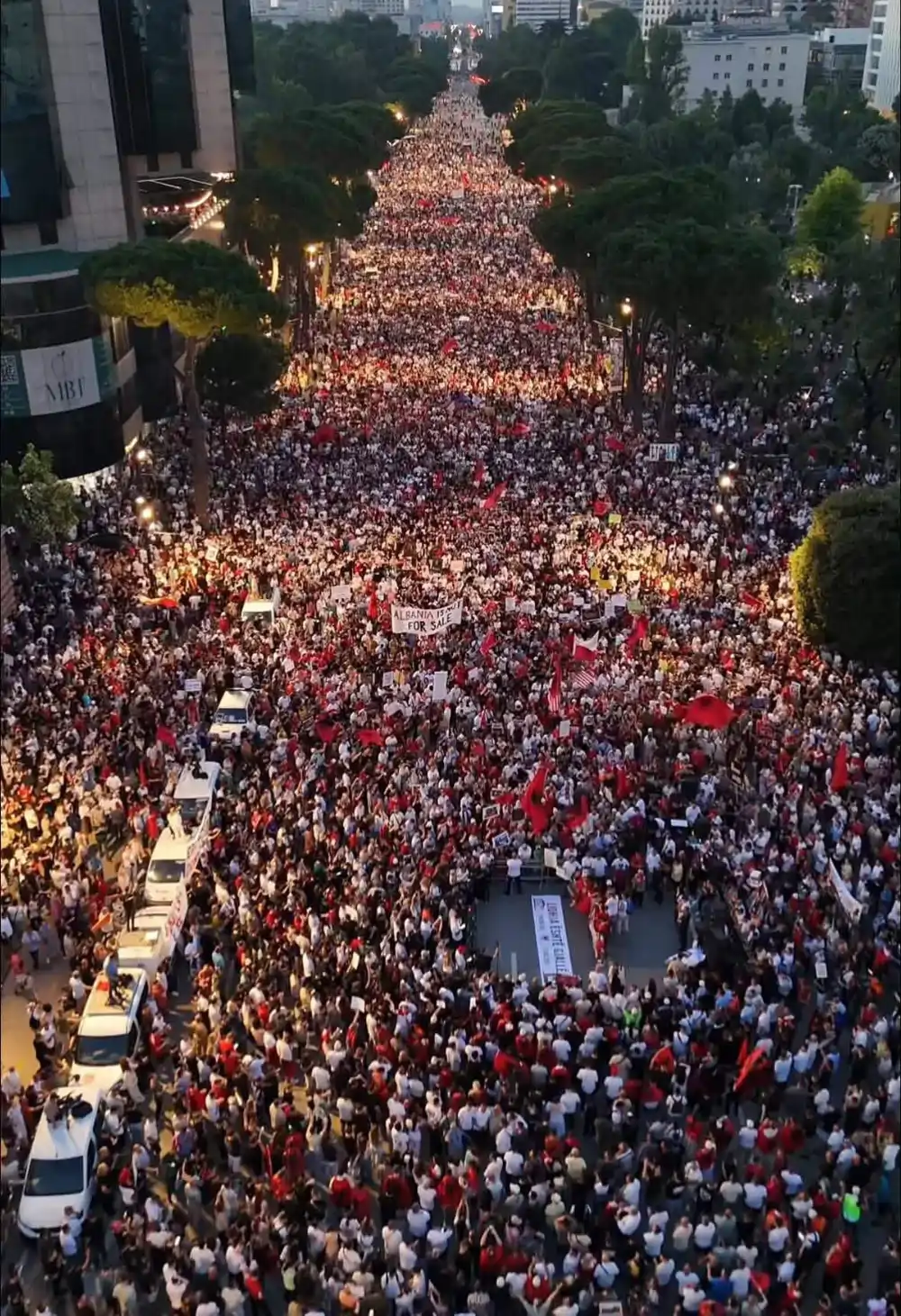
Sot, në shumë pjesë të Shqipërisë, nga veriu në jug, nga malet e Thethit deri në brigjet e Vlorës, po dëgjohet i njëjti zë. Është zëri i qytetarëve që kërkojnë të dëgjohen. Është zëri i njerëzve që ndihen të pambrojtur përballë një pushteti që shpesh duket më i interesuar të imponojë vendime sesa të dialogojë me komunitetet që preken prej tyre.
Kur një qytetar del për të mbrojtur tokën e trashëguar nga gjyshërit dhe prindërit e tij, ai nuk po lufton kundër shtetit. Ai po mbron historinë e familjes së tij. Po mbron mundin e brezave. Po mbron kujtesën e atyre që kanë jetuar, punuar dhe sakrifikuar në atë tokë shumë kohë përpara se të ekzistonin pushtetet e sotme.
Për shqiptarin, toka nuk është vetëm një sipërfaqe e regjistruar në dokumente. Ajo është identitet. Është rrënjë. Është histori. Është lidhja që e mban njeriun të lidhur me vendin e vet. Prandaj, kur qytetarët ndiejnë se po u cenohet kjo lidhje pa drejtësi, pa transparencë dhe pa respekt, reagimi i tyre nuk është thjesht ekonomik; është moral dhe njerëzor.
Edhe më e dhimbshme bëhet situata kur përballë qytetarëve nuk qëndron dialogu, por forca. Kur në vend të dëgjimit shfaqet presioni. Kur njerëz të thjeshtë, burra e gra, të rinj e të moshuar, trajtohen si pengesë dhe jo si qytetarë me të drejta. Në ndërgjegjen shqiptare ekziston një kod i pashkruar nderi që ka mbijetuar brez pas brezi: respekti për nënën, për gruan, për të moshuarin dhe për dinjitetin njerëzor.
Kur nëna shqiptare qan për tokën e saj, nuk qan vetëm një individ. Ajo qan një familje. Ajo qan një histori. Ajo qan një pjesë të shpirtit të këtij kombi. Dhe kur një nënë poshtërohet, shtyhet apo trajtohet pa dinjitet, plagoset jo vetëm ajo, por vetë ndërgjegjja e shoqërisë.
Shqiptarët kanë kaluar pushtime, varfëri, diktaturë dhe padrejtësi. Kanë mbijetuar sepse kanë ruajtur nderin dhe dinjitetin.
Pikërisht për këtë arsye, çdo veprim që perceptohet si poshtërim i qytetarit të zakonshëm lë pasoja më të thella sesa çdo dëm material. Paratë mund të fitohen përsëri. Ndërtesat mund të rindërtohen. Por besimi i humbur mes qytetarit dhe shtetit është shumë më i vështirë për t’u rikthyer.
Shteti nuk është Qeveria
Një nga keqkuptimet më të mëdha në jetën politike shqiptare është përpjekja për ta identifikuar qeverinë me shtetin. Kjo është jo vetëm e gabuar, por edhe e rrezikshme për demokracinë.
Shteti është shumë më i madh se çdo qeveri. Shteti është Kushtetuta, ligji, institucionet, territori, sovraniteti dhe vetë qytetarët. Qeveria është vetëm administruesja e përkohshme e pushtetit që qytetarët i kanë besuar përmes votës. Qeveritë ndryshojnë. Shteti duhet të mbetet.
Prandaj, kritika ndaj qeverisë nuk është kritikë ndaj shtetit. Kundërshtimi i keqqeverisjes nuk është kundërshtim i rendit kushtetues. Përkundrazi, shpesh është përpjekje për ta mbrojtur atë.
Kur qytetarët protestojnë kundër padrejtësive, korrupsionit, mungesës së transparencës, shpërdorimit të pushtetit apo cenimit të të drejtave të tyre, ata nuk po sulmojnë shtetin. Ata po kërkojnë që shteti të funksionojë sipas parimeve për të cilat është krijuar.
Në një demokraci, qytetari nuk është subjekt i pushtetit. Ai është burimi i tij. Pushteti nuk është pronë e askujt. Ai është një përgjegjësi e përkohshme që duhet ushtruar në emër të interesit publik dhe nën kufijtë e ligjit.
Protesta si Mbrojtje e Shtetit të së Drejtës
Shteti i së drejtës nuk nënkupton bindje të verbër ndaj pushtetit. Ai nënkupton sundimin e ligjit mbi pushtetin.
Në një shtet të së drejtës, qytetarët nuk janë të detyruar të heshtin përballë padrejtësisë. Përkundrazi, ata kanë të drejtën dhe përgjegjësinë qytetare të reagojnë kur shohin se parimet demokratike rrezikohen.
E drejta për protestë nuk është privilegj që jepet nga qeveria. Ajo është një liri themelore demokratike. Ajo ekziston pikërisht për momentet kur qytetarët ndiejnë se institucionet nuk po i dëgjojnë, se vendimet po merren pa konsultim dhe se interesat e tyre po anashkalohen.
Një protestë paqësore nuk është shenjë dobësie e shtetit. Ajo është dëshmi e vitalitetit të demokracisë. Vetëm pushtetet që kanë frikë nga qytetarët e konsiderojnë protestën si kërcënim. Një shtet demokratik duhet ta shohë protestën si një alarm qytetar, si një thirrje për reflektim dhe si një mundësi për korrigjim.
Kur qytetarët protestojnë për pronën, për tokën, për dinjitetin, për të drejtën për t’u dëgjuar dhe për zbatimin e barabartë të ligjit, ata nuk po mbrojnë vetëm interesat e tyre personale. Ata po mbrojnë vetë themelin mbi të cilin ndërtohet shteti i së drejtës.
Dinjiteti mbi Forcën
Një shtet demokratik nuk matet nga aftësia për të ushtruar forcë. Forca është gjëja më e lehtë. Fuqia e vërtetë e shtetit matet nga aftësia për të dëgjuar, për të bindur, për të respektuar dhe për të gjetur zgjidhje që ruajnë dinjitetin e qytetarit.
Shqipëria nuk ka nevojë për qytetarë të frikësuar. Ka nevojë për qytetarë që ndihen të respektuar. Nuk ka nevojë për heshtje të imponuar. Ka nevojë për dialog. Nuk ka nevojë për arrogancë pushteti. Ka nevojë për drejtësi dhe llogaridhënie.
Shumë nga ata që sot protestojnë nuk kërkojnë privilegje. Ata nuk kërkojnë pushtet. Ata nuk kërkojnë favore. Ata kërkojnë respekt.
Kërkojnë të drejtën për t’u dëgjuar. Kërkojnë që prona e tyre të trajtohet me dinjitet. Kërkojnë që institucionet të mos vendosin mbi jetën e tyre pa i konsideruar si pjesë të vendimmarrjes.
Kjo është arsyeja pse protesta e tyre nuk është protestë kundër shtetit. Është protestë për një shtet më të drejtë. Për një shtet që nuk harron se sovrani është qytetari. Për një shtet që e kupton se autoriteti nuk buron nga forca, por nga besimi.
Përfundim
Nëse ka një mësim që duhet nxjerrë nga këto ngjarje, ai është se dinjiteti njerëzor nuk mund të trajtohet si pengesë administrative. Zëri i qytetarit nuk mund të shuhet me urdhra. Dashuria për tokën nuk mund të konsiderohet faj. Dhe kërkesa për drejtësi nuk mund të etiketohet si armiqësi ndaj shtetit.
Nga Thethi në Vlorë, nga çdo fshat e qytet ku qytetarët ndihen të lënë pas dore, dëgjohet e njëjta thirrje: të trajtohemi me respekt, të dëgjohemi me seriozitet dhe të mos na mohohet dinjiteti.
Sepse në fund të fundit, shteti nuk janë godinat, zyrat apo vulat. Shteti janë njerëzit. Dhe kur njerëzit dalin për të mbrojtur nderin, tokën dhe dinjitetin e tyre, ata nuk po luftojnë kundër shtetit. Ata po përpiqen ta kujtojnë atë se kujt i përket dhe përse ekziston.
Një komb nuk bëhet më i fortë kur qytetarët e tij heshtin nga frika. Një komb bëhet më i fortë kur qytetarët kanë guximin të ngrihen në këmbë për atë që besojnë se është e drejtë. Dhe kur ata e bëjnë këtë në emër të drejtësisë, dinjitetit dhe respektit njerëzor, ata nuk po sfidojnë shtetin. Ata po mbrojnë shtetin e së drejtës.
Sepse historia na mëson se shtetet nuk dobësohen nga qytetarët që kërkojnë drejtësi. Ato dobësohen kur drejtësia mungon. Nuk rrezikohen nga protestat paqësore. Rrezikohen kur pushteti harron kufijtë e vet. Nuk shemben nga zëri i qytetarëve. Shemben kur humbasin besimin e tyre.
Dhe sa herë që një qytetar ngrihet për të mbrojtur lirinë, pronën, dinjitetin dhe të drejtën e tij për t’u dëgjuar, ai nuk është kundër shtetit. Ai është kujtesa më e fortë se shteti ekziston për qytetarin, dhe jo qytetari për shtetin.
Vendi i Lekës, 11.06.2026
Protest for Dignity, Land, and the Rule of Law
Isuf B. Bajrami
There are moments in the history of a nation when silence becomes complicity. There are moments when citizens do not take to the streets for political interests, privileges, or personal gain, but because they feel that something far more sacred is being threatened: their land, their dignity, their honor, and their right to live freely in their own country.
Today, across many parts of Albania, from north to south, from the mountains of Theth to the shores of Vlora, the same voice can be heard. It is the voice of citizens demanding to be heard. It is the voice of people who feel unprotected in the face of a government that often appears more interested in imposing decisions than engaging in dialogue with the communities affected by them.
When a citizen stands up to defend land inherited from parents and grandparents, he is not fighting against the state. He is defending his family’s history. He is protecting the labor and sacrifices of generations. He is safeguarding the memory of those who lived, worked, and struggled on that land long before today’s governments ever existed.
For Albanians, land is not merely a parcel recorded in legal documents. It is identity. It is heritage. It is history. It is the bond that connects a person to their homeland. Therefore, when citizens feel that this bond is being undermined without justice, transparency, or respect, their reaction is not merely economic—it is moral and deeply human.
The situation becomes even more painful when citizens are met not with dialogue, but with force. When pressure replaces listening. When ordinary men and women, young and old, are treated as obstacles rather than as citizens with rights. Within Albanian society there exists an unwritten code of honor that has survived generations: respect for mothers, women, elders, and human dignity.
When an Albanian mother weeps for her land, it is not only an individual who is crying. A family is crying. A history is crying. A part of the soul of this nation is crying. And when a mother is humiliated, pushed aside, or treated without dignity, it is not only she who is wounded—it is the conscience of society itself.
Albanians have endured occupations, poverty, dictatorship, and injustice.
They survived because they preserved their honor and dignity. For this reason, any act perceived as humiliating an ordinary citizen leaves deeper scars than any material loss. Money can be earned again. Buildings can be rebuilt. But the trust lost between citizens and the state is far more difficult to restore.
The State Is Not the Government
One of the greatest misconceptions in Albania’s public life is the attempt to equate the government with the state. This is not only incorrect; it is dangerous for democracy.
The state is far greater than any government. The state is the Constitution, the law, institutions, territory, sovereignty, and above all its citizens. The government is merely the temporary administrator of authority entrusted to it through the will of the people.
Governments change. The state must endure.
For this reason, criticism of a government is not criticism of the state. Opposition to poor governance is not opposition to the constitutional order. On the contrary, it is often an effort to protect that order.
When citizens protest against injustice, corruption, lack of transparency, abuse of power, or violations of their rights, they are not attacking the state. They are demanding that the state function according to the principles for which it was created.
In a democracy, the citizen is not a subject of power. The citizen is its source. Political authority belongs to no individual and no administration. It is a temporary responsibility that must be exercised in the public interest and within the limits of the law.
Protest as a Defense of the Rule of Law
The rule of law does not mean blind obedience to those who govern. It means the supremacy of law over power.
In a state governed by the rule of law, citizens are not expected to remain silent in the face of injustice. On the contrary, they have both the right and the civic responsibility to respond when democratic principles are threatened.
The right to protest is not a privilege granted by government. It is a fundamental democratic freedom. It exists precisely for those moments when citizens feel that institutions are not listening, that decisions are being imposed without consultation, and that their interests are being ignored.
A peaceful protest is not a sign of weakness in a state. It is evidence of democratic vitality. Only governments that fear their citizens view protest as a threat. A democratic state should view protest as a civic alarm, a call for reflection, and an opportunity for correction.
When citizens protest for their property, their land, their dignity, their right to be heard, and the equal application of the law, they are not merely defending personal interests. They are defending the very foundations upon which the rule of law is built.
Dignity Above Force
A democratic state is not measured by its capacity to exercise force. Force is the easiest tool available to power. The true strength of a state lies in its ability to listen, persuade, respect, and find solutions that preserve the dignity of its citizens.
Albania does not need frightened citizens. It needs citizens who feel respected. It does not need imposed silence. It needs dialogue. It does not need the arrogance of power. It needs justice and accountability.
Many of those protesting today are not seeking privileges. They are not seeking power. They are not seeking favors. They are seeking respect. They are demanding the right to be heard. They are asking that their property be treated with dignity and that institutions not make decisions affecting their lives without recognizing them as participants in the process.
This is why their protest is not a protest against the state. It is a protest for a more just state. For a state that does not forget that the citizen is sovereign. For a state that understands that authority derives not from force, but from trust.
Conclusion
If there is one lesson to be drawn from these events, it is that human dignity cannot be treated as an administrative obstacle. The voice of the citizen cannot be silenced by orders. Love for one’s land cannot be treated as a crime. And the demand for justice cannot be labeled hostility toward the state.
From Theth to Vlora, from every village and city where citizens feel neglected or unheard, the same call is being raised: treat us with respect, listen to us seriously, and do not deny us our dignity.
Because ultimately, the state is not its buildings, offices, or official seals. The state is its people. And when people rise to defend their honor, their land, and their dignity, they are not fighting against the state. They are reminding it whom it belongs to and why it exists.
A nation does not become stronger when its citizens remain silent out of fear. A nation becomes stronger when its citizens have the courage to stand up for what they believe is right. And when they do so in the name of justice, dignity, and human respect, they are not challenging the state—they are defending the rule of law.
History teaches us that states are not weakened by citizens who demand justice.
They are weakened when justice disappears. They are not endangered by peaceful protests. They are endangered when power forgets its limits. They do not collapse because citizens raise their voices. They collapse when they lose the trust of the people.
And whenever a citizen stands up to defend freedom, property, dignity, and the right to be heard, that citizen is not acting against the state. He or she is the strongest reminder that the state exists for the citizen—not the citizen for the state.
The Land of Leka, 11.06.2026