


 [ Libra NëLinjë ]
 Isuf B. Bajrami
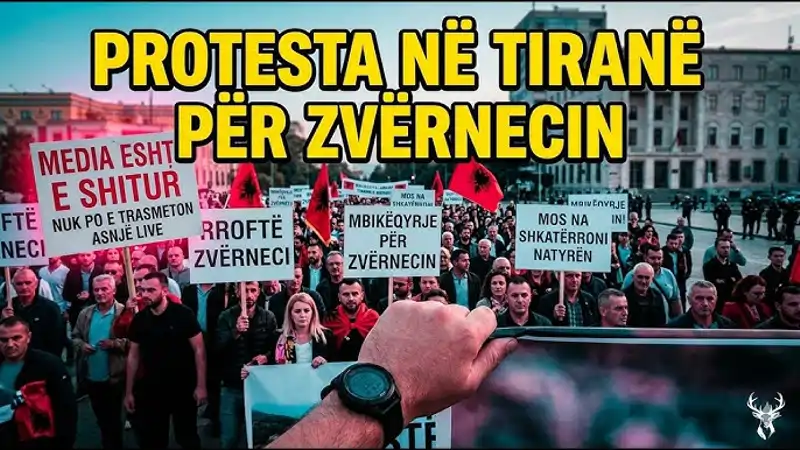
Ngjarja e raportuar në Zvërnec, e zhvilluar në kontekstin e një proteste qytetare, është interpretuar në diskursin publik përmes kornizave të ndryshme, ku vihet re një zhvendosje nga dimensioni qytetar drejt atij identitar. Në bazë të teorisë së kornizimit dhe qasjeve konstruktiviste ndaj nacionalizmit, trajtohet mënyra se si identiteti etnik mund të bëhet kategori dominuese në përfaqësimin publik të ngjarjeve lokale në kontekste historikisht të ndjeshme si Ballkani Perëndimor.¹
Kornizimi dhe ndërtimi i kuptimit publik
Ngjarjet publike nuk transmetohen në mënyrë neutrale, por përmes përzgjedhjes dhe theksimit të elementeve të caktuara të realitetit. Sipas Entman, kornizimi është procesi përmes të cilit disa aspekte të realitetit bëhen më të spikatura në një tekst komunikativ, duke formësuar kështu përkufizimin e problemit, atribuimin e shkaqeve, gjykimin moral dhe rekomandimet për veprim.²
Konteksti qytetar i protestës në Zvërnec
Protesta e raportuar në Zvërnec lidhet me shqetësime të artikuluara nga banorët mbi çështje të pronësisë, administrimit të territorit dhe vendimmarrjes institucionale në nivel lokal.
Në kuptimin normativ, e drejta për tubim paqësor dhe shprehje publike përbën një element themelor të sistemeve demokratike dhe është e garantuar nga instrumentet ndërkombëtare të të drejtave të njeriut, përfshirë nenin 21 të Paktit Ndërkombëtar për të Drejtat Civile dhe Politike.³
Zhvendosja drejt kornizës identitare
Pas incidentit të raportuar, një pjesë e diskursit publik u orientua drejt identitetit etnik të një prej individëve të përfshirë. Në literaturën mbi komunikimin politik, një proces i tillë përkufizohet si “ethnic framing”, ku identiteti bëhet kategori qendrore e interpretimit të konfliktit, duke zëvendësuar kontekstin strukturor ose situacional.
Brubaker argumenton se përdorimi i pakritik i kategorive etnike si njësi analitike rrezikon t’i trajtojë ato si entitete të qëndrueshme dhe homogjene, duke injoruar natyrën e tyre relacionalo-kontekstuale dhe të situatës.⁴
Konteksti rajonal dhe ndjeshmëria historike
Ballkani Perëndimor karakterizohet nga ndërthurja e narrativave historike me zhvillimet bashkëkohore politike. Todorova ka argumentuar se rajoni shpesh përfaqësohet përmes konstrukteve diskursive që prodhojnë “imagjinata gjeografike dhe historike”, të cilat ndikojnë në mënyrën se si interpretohen ngjarjet aktuale.⁵
Në këtë kuadër, marrëdhëniet shqiptaro–greke duhet kuptuar si një hapësirë ndërveprimi kompleks që përfshin bashkëpunim institucional, ndërvarësi shoqërore dhe, në disa raste, riaktivizim të narrativave historike në diskursin publik.
Perceptimet mbi standardet normative
Në diskursin publik shqiptar janë artikuluar herë pas here shqetësime lidhur me raste që përfshijnë qytetarë shqiptarë në Greqi, veçanërisht në kontekste që lidhen me ndërhyrjet e autoriteteve të rendit ose procedurat penale.
Edhe pse këto raste kërkojnë vlerësim individual dhe të bazuar në prova, ato kontribuojnë në formësimin e perceptimeve mbi konsistencën e zbatimit të standardeve të të drejtave të njeriut dhe të barazisë para ligjit. Parimi i universalitetit të të drejtave të njeriut kërkon që mbrojtja juridike të mos kushtëzohet nga përkatësia kombëtare apo etnike.⁶
Ndërveprimi i niveleve të interpretimit
Ngjarja në Zvërnec vendoset në ndërthurjen e tre niveleve analitike:
niveli lokal i konfliktit social dhe mobilizimit qytetar
niveli diskursiv i kornizimit mediatik dhe politik
niveli strukturor i narrativave historike dhe identitare në rajon
Ky ndërveprim krijon kushtet për transformimin e një ngjarjeje lokale në një objekt interpretimesh më të gjera simbolike.
Përfundim
Interpretimi i ngjarjeve të karakterit lokal kërkon dallim të qartë ndërmjet rolit qytetar dhe identitetit etnik, si dhe ndërmjet faktit empirik dhe kornizimit diskursiv.
Zhvendosja e fokusit drejt identitetit në vend të kontekstit rrit rrezikun e keqinterpretimit dhe amplifikimit të ngjarjeve përtej përmasave të tyre empirike.
Një qasje analitike e bazuar në ndarje konceptuale, konsistencë normative dhe kujdes interpretativ kontribuon në një kuptim më të saktë të ngjarjeve dhe në reduktimin e tensioneve diskursive në hapësirën publike.
Fusnota:
1. Benedict Anderson, Imagined Communities: Reflections on the Origin and Spread of Nationalism, rev. ed. (London: Verso, 1991); Rogers Brubaker, Ethnicity without Groups (Cambridge, MA: Harvard University Press, 2004). Këto vepra përbëjnë bazën teorike të qasjes konstruktiviste ndaj identitetit kombëtar dhe etnik, duke theksuar natyrën e tij të ndërtuar shoqërisht dhe jo të dhënë në mënyrë esenciale.
2. Robert M. Entman, “Framing: Toward Clarification of a Fractured Paradigm,” Journal of Communication 43, no. 4 (1993): 51–58. Entman ofron një nga përkufizimet më të përdorura në studimet e komunikimit politik mbi mënyrën se si media strukturon realitetin përmes seleksionimit dhe theksimit të elementeve të caktuara të një ngjarjeje.
2. United Nations, International Covenant on Civil and Political Rights (ICCPR), adopted 16 December 1966, entered into force 23 March 1976, Article 21. Ky nen garanton të drejtën e tubimit paqësor si pjesë e të drejtave themelore civile dhe politike në sistemin ndërkombëtar të të drejtave të njeriut.
4. Rogers Brubaker, Ethnicity without Groups (Cambridge, MA: Harvard University Press, 2004), 7–12. Brubaker kritikon përdorimin e kategorive etnike si njësi të qëndrueshme analitike dhe propozon qasjen relacionalo-procesuale, ku “grupet” trajtohen si produkte të situatave specifike dhe jo si entitete të fiksuara.
5. Maria Todorova, Imagining the Balkans (New York: Oxford University Press, 1997). Todorova analizon mënyrën se si Ballkani është ndërtuar si koncept diskursiv në imagjinatën politike evropiane dhe si narrativat historike ndikojnë në perceptimin e rajonit.
6. United Nations, Universal Declaration of Human Rights, adopted 10 December 1948, Articles 1–2; European Court of Human Rights jurisprudence on non-discrimination principles (Article 14 ECHR). Këto instrumente vendosin parimin e barazisë dhe mosdiskriminimit si themel të rendit juridik ndërkombëtar të të drejtave të njeriut.
Vendi i Lekës, 01.06.2026
Ramë zeza për Zvërnecin:
Kliko Watch on YouTube, për të parë videon
Framing the Protest in Zvërnec and Identity Narratives in Albanian–Greek Public Discourse
Isuf B. Bajrami
The reported incident in Zvërnec, occurring in the context of a citizens’ protest, has been interpreted in public discourse through multiple frames, with a notable shift from a civic dimension toward an identity-based interpretation. Drawing on framing theory and constructivist approaches to nationalism, this article examines how ethnic identity can become a dominant category in the public representation of local events in historically sensitive contexts such as the Western Balkans.¹
Framing and the Construction of Public Meaning
Public events are not communicated in a neutral manner but through the selection and emphasis of specific aspects of reality. According to Entman, framing is the process through which certain elements of a communicative text are made more salient, thereby shaping problem definition, causal attribution, moral evaluation, and potential remedies.²
The Civic Context of the Zvërnec Protest
The protest reported in Zvërnec is associated with concerns expressed by local residents regarding issues related to property rights, territorial administration, and institutional decision-making at the local level.
Normatively, the right to peaceful assembly and expression constitutes a fundamental element of democratic systems and is guaranteed by international human rights instruments, including Article 21 of the International Covenant on Civil and Political Rights.³
The Shift Toward Identity-Based Framing
Following the reported incident, part of the public discourse shifted toward the ethnic identity of one of the individuals involved. In the literature on political communication, this process is described as “ethnic framing,” where identity becomes the central interpretive category of conflict, replacing structural or situational context.
Brubaker argues that the uncritical use of ethnic categories as analytical units risks treating them as fixed and homogeneous entities, while in reality they are relational, situational, and context-dependent.⁴
Regional Context and Historical Sensitivity
The Western Balkans is characterized by the intertwining of historical narratives with contemporary political developments.
Todorova has argued that the region is often represented through discursive constructions that produce “historical and geographical imaginations,” shaping the interpretation of present-day events.⁵
Within this context, Albanian–Greek relations represent a complex space of interaction combining institutional cooperation, social interconnection, and periodic reactivation of historical narratives in public discourse.
Perceptions of Normative Standards
In Albanian public discourse, recurring concerns have been expressed regarding cases involving Albanian citizens in Greece, particularly in contexts related to law enforcement interventions or legal proceedings.
While each case must be assessed individually and empirically, such perceptions contribute to broader understandings of the consistency in the application of human rights standards and the principle of equality before the law.
The universality principle requires equal legal protection regardless of nationality or ethnic affiliation.⁶
Interaction of Levels of Interpretation
The Zvërnec case is situated at the intersection of three analytical levels:
the local level of social conflict and civic mobilization
the discursive level of media and political framing
the structural level of historical and identity narratives in the region
This interaction enables a local event to acquire broader symbolic meanings beyond its empirical scope.
Conclusion
The interpretation of local events requires a clear analytical distinction between civic roles and ethnic identity, as well as between empirical fact and discursive framing.
A shift from contextual interpretation toward identity-based framing increases the risk of misrepresentation and amplification of events beyond their original scale.
An approach grounded in conceptual differentiation, normative consistency, and interpretive caution contributes to a more accurate understanding of events and to the reduction of discursive tensions in public space.
Footnotes:
1. Benedict Anderson, Imagined Communities: Reflections on the Origin and Spread of Nationalism, rev. ed. (London: Verso, 1991); Rogers Brubaker, Ethnicity without Groups (Cambridge, MA: Harvard University Press, 2004). These works form the basis of constructivist approaches to national and ethnic identity, emphasizing their socially constructed rather than essential nature.
2. Robert M. Entman, “Framing: Toward Clarification of a Fractured Paradigm,” Journal of Communication 43, no. 4 (1993): 51–58. Entman provides one of the most influential definitions of framing in political communication, highlighting how media structures reality through selection and salience.
3. United Nations, International Covenant on Civil and Political Rights (ICCPR), adopted 1966, Article 21. This provision guarantees the right to peaceful assembly as a fundamental civil and political right under international law.
4. Rogers Brubaker, Ethnicity without Groups (Cambridge, MA: Harvard University Press, 2004), 7–12. Brubaker critiques the reification of ethnic categories and proposes a relational and process-oriented approach to group formation.
5. Maria Todorova, Imagining the Balkans (New York: Oxford University Press, 1997). Todorova examines how the Balkans are constructed through external and internal discursive narratives shaping regional perception.
6. United Nations, Universal Declaration of Human Rights, 1948, Articles 1–2; European Convention on Human Rights, Article 14. These instruments establish the principles of equality and non-discrimination as foundational norms in international human rights law.
The Land of Leka, 01.06.2026
Shënim: Rrenat e Ramës, si për Durrësin si Dunai me Al-Abar, as nuk është Kushner as tjetër, atë terriror don ta marrë mafia shqiptare e lidhur me Sinaloa, dhe p]erhapin fjale sikur është dhëndrri i Trump… Kështu donte Rama t’ia jepte edhe veriun e Kosovës Serbisë, e rrejti Hashimin, por s’i la Albini…