



 [ Libra NëLinjë ]
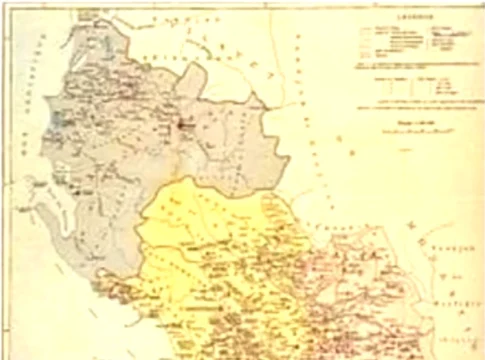
Vilajeti i Janinës, sipas përshkrimit të Sami Frashërit
– Vilajeti i Janinës
Sipas Sami Frashërit në vitet 1889-1898
Isuf B. Bajrami
Teksti që vijon paraqet një përshkrim të hollësishëm dhe të strukturuar të Vilajetit të Janinës, i mbështetur në të dhënat dhe analizat e Sami Frashërit, një prej figurave më të rëndësishme të mendimit enciklopedik dhe historiografik shqiptar të gjysmës së dytë të shekullit XIX. Si një intelektual me formim të gjerë kulturor dhe administrativ, Frashëri ofron një pasqyrë gjithëpërfshirëse të realitetit të një prej njësive më të rëndësishme administrative të Perandorisë Osmane në hapësirën ballkanike, duke e shndërruar këtë përshkrim në një burim parësor me vlerë të veçantë për studimet historike dhe gjeografike.
Të dhënat e paraqitura në këtë tekst ndihmojnë në rikonstruksionin e strukturës territoriale dhe administrative të Vilajetit të Janinës, duke ofruar informacion të saktë mbi kufijtë e tij, ndarjen në prefektura, kaza dhe fshatra, si dhe mbi funksionimin e qendrave urbane dhe rurale. Ky dimension administrativ është thelbësor për të kuptuar mekanizmat e qeverisjes osmane në provincat perëndimore të perandorisë dhe marrëdhëniet ndërmjet pushtetit qendror dhe strukturave lokale.
Një vëmendje e veçantë i kushtohet përshkrimit të veçorive fiziko-gjeografike të rajonit, përfshirë relievin malor dhe fushor, rrjetin hidrografik, klimën dhe pasuritë natyrore. Analiza e këtyre elementeve lejon një kuptim më të thellë të ndërveprimit ndërmjet mjedisit natyror dhe aktivitetit njerëzor, veçanërisht në zhvillimin e bujqësisë, blegtorisë dhe qarkullimit tregtar. Në këtë kuadër, teksti ofron të dhëna të rëndësishme për strukturën e prodhimit bujqësor, llojet e kulturave të mbjella, format e shfrytëzimit të tokës dhe rolin e kullotave sezonale në ekonominë lokale.
Nga pikëpamja demografike dhe shoqërore, dokumenti paraqet informacione me interes të veçantë mbi përbërjen etnike dhe fetare të popullsisë së vilajetit. Të dhënat mbi raportin ndërmjet popullsisë myslimane dhe asaj të krishterë, si dhe identifikimi i elementit shqiptar si përbërësi dominues i të dy këtyre grupeve, përbëjnë një dëshmi të rëndësishme për studimin e strukturës etnike të rajonit në prag të proceseve të nacionalizmit ballkanik. Prania e komuniteteve vllahe, greke dhe hebraike trajtohet si pjesë përbërëse e mozaikut shoqëror të Vilajetit të Janinës, duke reflektuar kompleksitetin kulturor dhe ndërfetare të kësaj hapësire.
Përshkrimi i detajuar i qyteteve dhe kazave kryesore, përfshirë Janinën, Prevezën, Pargën, Paramithinë, Filatin, Konicën dhe Margëlliçin, kontribuon në kuptimin e zhvillimit urban, funksioneve administrative dhe ekonomike të këtyre qendrave, si dhe në analizën e marrëdhënieve të tyre me hapësirën përreth rurale. Përmes këtij dimensioni, teksti hedh dritë mbi rolin e tregtisë, zejtarive dhe institucioneve arsimore e fetare në formësimin e jetës shoqërore dhe kulturore të vilajetit.
Në një plan më të gjerë historiografik, ky tekst duhet parë jo vetëm si një përmbledhje statistikore apo përshkruese, por si një dokument që pasqyron mënyrën se si një intelektual shqiptar i shekullit XIX konceptonte hapësirën, popullsinë dhe organizimin shoqëror të trojeve shqiptare brenda Perandorisë Osmane. Për rrjedhojë, ai ofron një këndvështrim të çmuar për studimin e diskursit historik dhe gjeografik të periudhës, si dhe për analizën e formimit të vetëdijes historike dhe kulturore shqiptare.
Në përfundim, ky përshkrim i Vilajetit të Janinës përfaqëson një burim dokumentar me rëndësi të veçantë për historiografinë shqiptare dhe ballkanike. Ai shërben si bazë e qëndrueshme për studime të mëtejshme ndërdisiplinore në fushat e historisë, gjeografisë historike, demografisë dhe studimeve kulturore, duke kontribuar në një kuptim më të thellë të realitetit politik, shoqëror dhe ekonomik të rajonit në fund të shekullit XIX.
Vilajeti i Janinës është një nga vilajetet e Rumelisë (bizanti europian). Ai përfshin pjesën më të madhe të Jugut, pra gjysmën e Toskërisë që më parë quhej Epir. Ka një sipërfaqe prej 18.200 km2 dhe 650.000 banorë. Kufizohet në Veri me Vilajetin e Shkodrës, në Verilindje me Vilajetin e Manastirit dhe në Juglindje me Greqinë. Në Jug, kufizohet me Gjirin e Artës, në Jugperëndim me Detin Jon dhe në Perëndim me Detin Adriatik. Shteti i Janines ka 4 Prefektura, 19 Komuna, 10 Krahina te mëdha dhe 1.597 fshatra.
Vargmali më i lartë malor është Pindi që shtrihet nga Veriu në Jug. Në Perëndim të tij është mali Gramos. Pranë Beratit ndodhet një mal i izoluar i quajtur Tomor. Ka shumë male të tjera brenda kufijve të vilajetit, të tilla si Trebeshina, Nemërçka, Lungara, Uliçka, Suli, etj. Në këto zona malore ka pak fusha dhe lugina të gjera. Ekziston një varg i bukur kodrash përgjatë vijës bregdetare në Jug, dhe në Veriperëndim ka një fushë të gjerë të quajtur Myzeqe. Të gjithë lumenjtë e këtij vilajeti zbrazen në detet Adriatik dhe Jon.
Lumenjtë më të mëdhenj janë Vjosa dhe Seman. I pari e merr burimin në malet e Pindit në Juglindje të Vilajetit dhe derdhet në drejtim të Veriperëndimit, duke u zbrazur në Detin Adriatik në Veri të Vlorës. Sa i përket lumit Seman, ai furnizohet nga lumenjtë Devoll dhe Berat, ky i fundit i njohur gjithashtu si Osum. Të dy këta i marrin burimet nga mali Gramos.
Liqeni më i madh është ai i Janinës, dhe pas tij vjen ai i fushës së Myzeqesë, Tërbufi dhe Lurusi. Përgjatë vijës bregdetare, ka laguna moçalore si Karavasta në Myzeqe.
Në dimër, malet janë mbuluar nga bora. Megjithëse është shumë ftohtë në shtrirje të larta, luginat dhe zona bregdetare kanë një klimë të butë dhe të ngrohtë. Prodhimi kryesor është misri, i ndjekur nga gruri, elbi, thekra, tërshëra, orizi, duhani dhe pak pambuk, etj. Pas mbulimit të nevojave të brendshme, shumica e prodhimeve të tij eksportohen. Afër bregdetit, ata rritin ullinj dhe në disa vende ullinj të egër.
Rreth Prevezës, ka shumë pemë limoni, portokalli dhe mandarine. Dhe vreshtat prodhojnë shumë fruta, të cilat janë kryesisht për eksport. Pyjet janë kryesisht pisha dhe bredha skocezë, etj. Ka shumë kullota, si në verë ashtu edhe në dimër, dhe banorët rritin shumë dhi dhe dele. Nuk ka shumë lopë, dhe këto janë kryesisht të një race të vogël.
Sa i përket popullsisë, 2/3 e njerëzve janë myslimanë dhe 1/3 e krishterë. Përveç kësaj, të gjithë muslimanët janë shqiptarë, siç janë shumica e të krishterëve. Vetëm në Janinë ka fshatarë vllehë dhe grekë.
– Paramithia
Ёshtë rreth 40 kilometra në Jugperëndim të Janinës, Ka një klimë të këndshme edhe pse është në një lartësi të lartë. Ajo është e pajisur me vreshta dhe kopshte. Jo shumë larg janë rrënojat e qytetit antik të Orija. Një bimë shumë e njohur rritet në disa pjesë të kësaj zone është borziloku.
Parathimia përfshin 64 fshatra, nga të cilat 40 ndodhen në Veri të kryeqytetit dhe 24 në Jug. Krahina e Sulit, popullsia e së cilës njihet për guximin e saj dhe rezistencën që i dha Ali Pashë Tepelenës, ndodhet në Juglindje të kësaj kazaje. Ёshtë një rajon malor. Popullsia është rreth 16.000 nga të cilët shumica janë myslimanë. Ka 22 xhami, 51 shkolla të mesme, një medrese (shkollë fetare), dy shkolla fillore, tre dyqane lëkurësh dhe 13 ura.
– Filati
45 kilometra në Veri të Janinës. Ka 68 fshatra me 24.179 banorë. Ka shumë pemishte me ullinj dhe bajame, toka bujqësore të bukura dhe kodra të mbuluara me lloje të ndryshme pemësh. Klima është e butë, prandaj shumë njerëz vijnë këtu nga vendet më të larta për të kaluar dimrin. Aktiviteti bujqësor është lënë pas dore dhe, si i tillë, toka nuk përdoret në të vërtetë për bujqësi. Në fakt, shumë nga pemishtet e ullirit janë shkretuar sepse nuk ka kush t’i krasitë pemët. Shumica e njerëzve janë myslimanë dhe të gjithë janë shqiptarë. Ata janë të njohur për guximin, inteligjencën dhe pasurinë e tyre, por nuk janë të prirur drejt bujqësisë dhe blegtorisë.
– Janina
Ёshtë kryeqytet i vilajetit me të njëjtin emër i cili ndodhet në Jug të vilajetit të Shkodrës. Ёshtë 700 kilometra nga Stambolli dhe 200 kilometra nga Selaniku dhe ndodhet në bregun Perëndimor të liqenit që mban të njëjtin emër. Ka 35.000 banorë, 30 xhami, 6 kisha, 2 sinagoga, 3 teqe, shumë medrese, një bibliotekë, një idadiye (shkollë e mesme), një iptidayye (shkollë fillore), një shkollë të mesme posaçërisht për grekët e quajtur Zosimea, një mekteb (shkollë fetare) për gratë dhe një rushdiye (shkollë shtetërore, fetare-laike, si një gjimnaz) posaçërisht për vllehët. Ai gjithashtu ka një shtëpi greke për njerëz të moshuar, njerëz të varfër dhe jetimë, dhe një spital.
Një spital u ndërtua kohët e fundit për të mbuluar nevojat e qytetit. Ka një treg tërheqës, shumë bujtina dhe banja publike. Në kufirin e ngulitur në liqen, ekziston një fortesë nga koha e Ali Pashë Tepelenës, rreth së cilës ndodhen shumë ndërtesa ushtarake për të stërvitur ushtrinë. Afër qytetit janë vreshtat dhe toka pjellore. Ka lëkurë punues, argjendar, kallajxhi dhe shumë tregtarë.
– Konica
45 kilometra në Veriperëndim të Janinës. Ajo shtrihet përgjatë anës së një fushe në këmbët e një mali që ngrihet mbi lumin Vjosa. Popullsia është e njohur për inteligjencën dhe zgjuarsinë e saj. Ka 34 fshatra me rreth 25.000 banorë, gjysma e të cilëve janë shqiptarë myslimanë dhe gjysma tjetër shqiptarë të krishterë dhe vlleh.
– Margëlliç [Margariti]
Kazaja, së bashku me krahinat e Pargës dhe Fanarit, përfshijnë 71 fshatra me rreth 25.000 banorë. E gjithë popullsia është shqiptare, nga të cilët shumica janë myslimanë. Ata njihen për guximin dhe guximin e tyre. Toka është pjellore dhe prodhon të mbjella si oriz, ullinj, etj.
– Parga
Ndodhet 45 km në Veriperëndim të Prevezës dhe 55 km në Jugperëndim të Janinës. Ka 5.000 banorë, 1 xhami, 1 fortesë që ngrihet në një shkëmb me pamje nga deti, e rrethuar nga pemishte portokalli, limoni dhe ulliri. Eksportet e saj kryesore janë portokall, limon dhe ullinj. Ka një klimë shumë të butë dhe të favorshme për shërimin e sëmundjeve të frymëmarrjes. Notimi në det është gjithashtu shumë i dobishëm. Megjithëse anijet nuk mund të ankorohen këtu, ai është porti kryesor i Çamërisë, me anije me vela që vijnë e shkojnë në Korfuz dhe Trieste dhe kryejnë shumë tregti.
Ky qytet ishte në duart e anglezëve për një kohë të gjatë. Kur Ali Pasha Tepelena bleu qytetin nga anglezët, popullsia emigroi dhe ajo u bë çifliku personal i Ali Pashait. Pas ekzekutimit të tij, pasuritë e tij iu dorëzuan qeverisë. Në ditët e sotme, është në duar private. Njerëzit këtu janë shqiptarë myslimanë me disa shqiptarë të krishterë dhe grekë.
– Preveza
Qytet në jug të Shqipërisë, në Perëndim të Artës. Ndodhet në Vilajetin e Janinës Ёshtë 92 km në Jugperëndim të Janinës. Ka shumë pemishte me portokall, limon dhe ullinj. Ajo është e mbrojtur nga deti nga 4 fortesa, ka 2 xhami, njëra prej të cilave e ndërtuar nga Ali Pasha, si dhe 2 teqe. Ka një shkollë të mesme, disa shkolla fillore, 2 shkolla posaçërisht për grekët. Porti është shumë fitimprurës dhe fiton shumë të ardhura nga tregtia me Triesten, Korfuzin dhe disa porte në Greqi dhe Itali. Fjala Preveza është marrë nga emri i qytetit antik të themeluar nga Pirro i famshëm.
Ajo u ndërtua nga Octaviani, ndërsa rrënojat që gjenden një orë në Veri të Prevezës janë ato të Nikopolis, shkatërruar nga Bullgaro-Serbët. Republika e Venecias ndërtoi Prevezën e sotme dhe qyteti ishte nën sundimin e saj për mjaft kohë. Më vonë, me shtatë ishujt [Heptanesos], ajo ra në duart e francezëve dhe në 1798, Ali Pasha Tepelena e mori atë në luftime me francezët. Që nga ajo kohë, ajo ka qenë nën ndikimin e autoriteteve osmane. Pozicioni i tij është premtues nga pikëpamja tregtare dhe ushtarake.
Pjesa më e madhe e tokës përbëhet nga kodra të mbuluara me pemishte me pemë limoni dhe portokalli dhe nga një kullotë e bukur. Lumi Arta rrjedh në Lindje dhe formon kufirin me Greqinë. Ka dy lumenj të tjerë në këtë rreth. Njëri prej tyre është në Janinë dhe bashkohet me ujërat që rrjedhin nga malet Uliçka për të formuar lumin Lurus. Lumi tjetër është Ferar që rrjedh permes Margëlliqit. Ai e merr burimin në malet e Sulit, rrjedh drejt Perëndimit, bashkohet me lumin Vouvo që vjen nga Veriu dhe derdhet në Detin Jon. Ky lumë i cili në legjendat e lashta Greke njihej si portat e ferrit, quhet Acheron.
Popullsia është rreth 55.000 shumica e të cilëve janë myslimanë. Ka edhe të krishterë dhe disa hebrenj. Popullsia myslimane është e gjitha shqiptare, ashtu si shumica e të krishterëve. Në këtë rreth ka 179 fshatra, 48 xhami, 2 medrese, 30 mektebe [shkolla fetare], 220 kisha dhe manastire, 450 dyqane, 50 mullinj, etj.
Analizë e tekstit
Teksti përshkrues i Vilajetit të Janinës, i hartuar nga Sami Frashëri, përbën një burim dokumentar të një rëndësie të veçantë për studimin e historisë politike, shoqërore, ekonomike dhe kulturore të jugut të trojeve shqiptare në fund të shekullit XIX. Përtej vlerës së tij informative, ky tekst reflekton një mënyrë të caktuar konceptimi të hapësirës dhe popullsisë, duke u bërë kështu edhe një objekt i rëndësishëm analize historiografike dhe diskursive.
Konteksti historik dhe ideologjik i tekstit
Teksti duhet të lexohet në kontekstin e reformave të Tanzimatit dhe të krizës strukturore të Perandorisë Osmane, periudhë në të cilën u hartuan dhe u sistemuan një sërë përshkrimesh administrative dhe gjeografike të vilajeteve. Sami Frashëri, si pjesë e elitës intelektuale osmane dhe njëkohësisht si figurë qendrore e Rilindjes Kombëtare Shqiptare, operon në një hapësirë diskursive të dyfishtë: nga njëra anë, ai përdor gjuhën dhe kategoritë administrative osmane; nga ana tjetër, ai artikulon një vizion të qartë mbi vazhdimësinë dhe kohezionin etnik shqiptar.
Kjo dyzim ideologjik reflektohet në mënyrën se si ai i paraqet të dhënat: statistikat, ndarjet territoriale dhe përshkrimet gjeografike janë të standardizuara sipas praktikave osmane, ndërsa interpretimi i përbërjes etnike dhe shoqërore mbart një ngarkesë të dukshme afirmuese për elementin shqiptar.
Hapësira si kategori politike dhe kulturore
Hapësira në tekst nuk paraqitet thjesht si realitet gjeografik, por si një konstrukt politik dhe kulturor. Përshkrimi i kufijve të vilajetit, lidhja e tij me territore të tjera shqiptare dhe theksimi i vazhdimësisë territoriale të Toskërisë/Epirit nënkupton një konceptim të hapësirës si njësi historike dhe etnike.
Malet, lumenjtë dhe fushat nuk përshkruhen vetëm për vlerën e tyre natyrore, por edhe si elementë që kanë ndikuar në ruajtjen e identitetit, në mënyrat e jetesës dhe në organizimin shoqëror. Në këtë kuptim, relievi malor shfaqet si faktor mbrojtës dhe konservues i strukturave tradicionale, ndërsa zonat bregdetare dhe fushore lidhen me hapjen ndaj ndikimeve të jashtme dhe zhvillimin ekonomik.
Ekonomia si pasqyrë e strukturës shoqërore
Analiza ekonomike e tekstit zbulon një shoqëri kryesisht agrare, por jo të izoluar. Përshkrimi i kulturave bujqësore, i produkteve eksportuese dhe i rrjeteve tregtare tregon se Vilajeti i Janinës ishte pjesë e ekonomisë mesdhetare dhe ballkanike.
Megjithatë, teksti nxjerr në pah edhe kontradikta të brendshme: ndërsa disa zona përshkruhen si pjellore dhe të begata, të tjera paraqiten si të neglizhuara ose të pashfrytëzuara. Ky kontrast sugjeron pabarazi sociale dhe strukturore, si dhe probleme në menaxhimin e tokës dhe të fuqisë punëtore, të cilat lidhen me marrëdhëniet feudale, emigrimin sezonal dhe mungesën e investimeve.
Popullsia, identiteti dhe feja
Një nga pikat më delikate të analizës është trajtimi i marrëdhënies ndërmjet identitetit etnik dhe atij fetar. Teksti e ndan popullsinë sipas përkatësisë fetare, por në mënyrë të qartë e nënvizon përkatësinë etnike shqiptare si faktor unifikues. Ky pozicionim reflekton një paradigmë rilindase, sipas së cilës kombi përkufizohet mbi bazë gjuhe dhe prejardhjeje, jo feje.
Prania e komuniteteve të tjera etnike përmendet, por zakonisht në mënyrë periferike dhe pa një analizë të thelluar, çka tregon kufijtë e perspektivës së autorit dhe prioritetet e tij ideologjike. Megjithatë, vetë pranimi i pluralizmit etnik dhe fetar e bën tekstin një burim të rëndësishëm për studimin e bashkëjetesës ndërkomunitare.
Qyteti si qendër e modernitetit të hershëm
Qytetet, veçanërisht Janina dhe Preveza, paraqiten si qendra të administratës, arsimit dhe tregtisë. Përshkrimi i institucioneve arsimore dhe shëndetësore, i tregjeve dhe i zejtarive sugjeron një nivel relativisht të avancuar të urbanizimit dhe të diferencimit shoqëror.
Në këtë kuadër, qyteti shfaqet si hapësirë e modernitetit të hershëm, ku bashkëjetojnë struktura tradicionale dhe elemente të reformës osmane. Prania e shkollave për komunitete të ndryshme etnike dhe fetare tregon një proces paralel integrimi dhe fragmentimi shoqëror.
Diskursi i pushtetit dhe rezistencës
Teksti përmend figura dhe rajone të lidhura me rezistencën lokale, si Suli dhe qëndresa ndaj Ali Pashë Tepelenës. Këto përmendje nuk janë neutrale, por shërbejnë për të ndërtuar një narrativë të guximit dhe autonomisë lokale, e cila rezonon me diskursin kombëtar shqiptar.
Në të njëjtën kohë, përshkrimi i Ali Pashës si figurë qendrore administrative dhe ushtarake pasqyron ambivalencën e pushtetit lokal osman, i cili njëkohësisht shihet si forcë shtypëse dhe si faktor stabiliteti.
Vlera burimore dhe qasja kritike
Megjithë pasurinë e të dhënave, teksti duhet trajtuar me një qasje kritike. Shifrat demografike dhe ekonomike, ndonëse të vlefshme, nuk mund të merren si absolutisht të sakta, për shkak të mungesës së metodologjisë statistikore moderne. Gjithashtu, disa vlerësime cilësore mbi popullsinë reflektojnë stereotipe të kohës dhe qëndrime normative.
Megjithatë, pikërisht këto elemente e bëjnë tekstin të çmuar për analizën e mentaliteteve dhe diskurseve të shekullit XIX.
Në përfundim, teksti i Sami Frashërit mbi Vilajetin e Janinës përbën një dokument kompleks, ku ndërthuren përshkrimi empirik, analiza shoqërore dhe diskursi identitar. Ai ofron një pasqyrë të shumëanshme të një rajoni kyç të Ballkanit në një periudhë tranzicioni historik dhe mbetet një burim themelor për studimin e marrëdhënieve ndërmjet hapësirës, pushtetit dhe identitetit në fund të shekullit XIX.
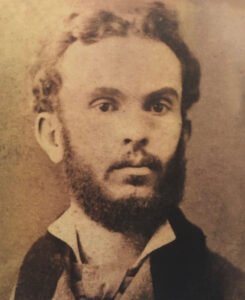
Sami Frashëri, një intelektual i Rilindjes Kombëtare Shqiptare
Konteksti historik dhe formimi i një intelektuali
Sami Frashëri (1850–1904) lindi në një familje me ndikim të theksuar në jetën kulturore dhe politike të shqiptarëve në periudhën osmane. Familja Frashëri, e vendosur në Frashër të Përmetit, ishte e njohur për traditën e saj arsimore dhe për angazhimin në çështjen kombëtare, duke u bërë një nga qendrat më të rëndësishme të Rilindjes Kombëtare Shqiptare. Në këtë kuadër, Samiu rritet dhe formohet në një mjedis ku diskursi i identitetit, arsimit dhe emancipimit kombëtar ishte i pranishëm si një dimension i përditshëm i jetës familjare.1
Vitet e formimit të tij përkojnë me një periudhë të thellë transformimesh në Perandorinë Osmane. Reforma e Tanzimatit, e nisur në fillim të shekullit XIX dhe intensifikuar në mes të shekullit, synonte riorganizimin e administratës, modernizimin e institucioneve dhe konsolidimin e kontrollit shtetëror mbi provincat. Kjo periudhë krijoi një hapësirë të re për elitat intelektuale, duke i ofruar mundësi të reja për edukim, karrierë administrative dhe pjesëmarrje në diskursin publik.2 Sami Frashëri u rrit në këtë atmosferë reformash, ku konceptet e modernitetit, të qytetërimit dhe të identitetit kombëtar filluan të trajtoheshin në mënyrë më të hapur dhe sistematike.3
Edukimi dhe profilizimi kulturor
Formimi shkollor i Sami Frashërit lidhet ngushtë me qendrën e rëndësishme kulturore dhe arsimore të Janinës, një qytet që në atë kohë përfaqësonte një nga nyjet kryesore të dijes në Ballkanin osmoman. Aty ai merr kontakt me traditën islame të shkollimit, me kulturën greko-latine dhe me influencat evropiane të kohës.4 Kjo përzierje kulturash dhe gjuhësh do të bëhej një nga karakteristikat kryesore të profilit të tij intelektual: ai zotëronte njohuri të gjera në gjuhë dhe literatura të ndryshme, si shqip, osmanisht, turqisht e re, greqisht, arabisht, persisht dhe frëngjisht.5
Kjo shumëgjuhësi nuk ishte thjesht një aftësi teknike, por një instrument për të ndërtuar një vizion enciklopedik dhe për të krijuar urë midis botës osmane dhe asaj evropiane.6 Sami Frashëri u shfaq si një intelektual i aftë të përkufizojë, sistematizojë dhe transmetojë njohuri në mënyrë të organizuar, duke adoptuar një qasje shkencore të kohës.7
Vepra enciklopedike dhe gjeografia si fushë e studimit
Një nga dimensionet më të rëndësishme të veprimtarisë së Sami Frashërit është roli i tij në leksikografi dhe enciklopedistikë. Vepra e tij më e njohur, Kâmûsü’l-A‘lâm, përbën një enciklopedi të gjerë të botës osmane dhe përmban një përmbledhje të detajuar të njohurive gjeografike, historike dhe kulturore të kohës.8 Kjo vepër nuk është vetëm një produkt i dijes së kohës, por edhe një reflektim i një koncepti të ri të shkencës: njohja duhet të organizohet në mënyrë sistematike, duke përfshirë të dhëna të sakta dhe të verifikueshme.9
Në këtë kontekst, përshkrimet e rajoneve shqiptare, përfshirë Vilajetin e Janinës, shfaqen si pjesë e një projekti më të gjerë: dokumentimi i hapësirës dhe i popullimit, për t’u ofruar lexuesve një panoramë të plotë të realitetit në rajonet e Perandorisë Osmane.10 Për Sami Frashërin, gjeografia nuk ishte vetëm një disiplinë akademike, por edhe një instrument politik dhe kulturor për afirmimin e një identiteti kombëtar.11
Sami Frashëri si ideolog i Rilindjes Kombëtare Shqiptare
Përveç veprimtarisë enciklopedike, Sami Frashëri njihet si një nga teoricienët kryesorë të kombit shqiptar. Teksti i tij politik Shqipëria – ç’ka qenë, ç’është e ç’do të bëhet përbën një nga parimet themelore të mendimit kombëtar shqiptar.12 Në këtë vepër ai argumenton se kombi shqiptar nuk duhet të konceptohet në bazë të besimit fetar, por në bazë të gjuhës, historisë dhe kulturës së përbashkët.13 Ky koncept ishte i rëndësishëm për kohën, sepse Perandoria Osmane ishte një shtet shumëkombësh, ku identiteti shpesh përkufizohej përmes besimit dhe komuniteteve fetare.
Kontributi në gjuhësinë dhe arsimin shqip
Një tjetër dimension i rëndësishëm i veprimtarisë së Sami Frashërit është puna e tij në gjuhën shqipe. Ai mbështeti fuqimisht përpjekjet për standardizimin e alfabetit dhe për krijimin e një letërsie kombëtare. Ai besonte se arsimimi në gjuhën amtare ishte themelor për emancipimin kulturor dhe shoqëror të shqiptarëve.14 Në këtë kontekst, Sami Frashëri promovoi ide të reja për shkollimin dhe për përhapjen e dijes si një instrument për modernizim.15
Aktiviteti politik dhe marrëdhëniet me Perandorinë Osmane
Sami Frashëri jetoi dhe veproi në një kohë kur Perandoria Osmane po përjetonte krizë dhe transformime të thella. Si intelektual i njohur dhe i respektuar në Stamboll, ai zhvilloi një karrierë të suksesshme në administratën dhe jetën kulturore osmane. Megjithatë, ai mbeti gjithmonë i lidhur me çështjen shqiptare dhe me komunitetin e tij.16
Në aspektin politik, ai përfaqësonte një pozicion të ndërmjetëm: ai ishte kritik ndaj centralizimit dhe ndaj padrejtësive, por nuk u pozicionua si kundërshtar i hapur i Perandorisë. Përkundrazi, ai synonte reformimin e saj dhe riorganizimin e statusit të shqiptarëve brenda strukturave osmane. Kjo qasje reflekton kompleksitetin e kohës dhe përpjekjen për të gjetur një rrugë të mundshme mes autonomisë dhe unitetit perandorak.17
Vlerësimi i trashëgimisë dhe ndikimi në historiografinë shqiptare
Trashëgimia e Sami Frashërit është shumëdimensionale. Ai la pas një vepër enciklopedike, tekstet politike të Rilindjes, përpjekje për standardizimin e gjuhës dhe një sërë shkrimesh kulturore e pedagogjike. Në historiografinë shqiptare, Sami Frashëri konsiderohet si një nga themeluesit e mendimit modern shqiptar, i cili kontribuoi në formësimin e konceptit të kombit si një realitet i bazuar në gjuhë, kulturë dhe histori të përbashkët.18
Fusnota
1. Kristo Frashëri, Historia e Shqipërisë, vëll. II, Tiranë: Akademia e Shkencave, 2002, 230–236.
2. Carter V. Findley, Bureaucratic Reform in the Ottoman Empire: The Tanzimat and the Age of Reform, Princeton: Princeton University Press, 1980, 42–56.
3. Stavro Skendi, The Albanian National Awakening, Princeton: Princeton University Press, 1967, 92–110.
4. Nathalie Clayer, Aux origines du nationalisme albanais, Paris: Karthala, 2007, 24–32.
5. Robert Elsie, A Biographical Dictionary of Albanian History, New York: I.B. Tauris, 2012, 145–149.
6. Halil İnalcık, The Ottoman Empire: The Classical Age 1300–1600, London: Phoenix Press, 2000, 303–310.
7. Suraiya Faroqhi, The Ottoman Empire and the World Around It, London: I.B. Tauris, 2004, 68–75.
8. Sami Frashëri, Kâmûsü’l-A‘lâm, Stamboll, vëll. II, 1889–1892, 102–118.
9. Şerif Mardin, The Genesis of Young Ottoman Thought, Syracuse: Syracuse University Press, 1990, 119–130.
10. Robert Elsie, Historical Dictionary of Albania, Lanham: Scarecrow Press, 2010, 215–220.
11. George Gawrych, The Crescent and the Eagle: Ottoman Rule, Islam and the Albanians, 1874–1913, London: I.B. Tauris, 2006, 38–45.
12. Sami Frashëri, Shqipëria – ç’ka qenë, ç’është e ç’do të bëhet, Stamboll, 1899, 14–30.
13. Stavro Skendi, The Albanian National Awakening, Princeton: Princeton University Press, 1967, 133–150.
14. Robert Elsie, A Biographical Dictionary of Albanian History, New York: I.B. Tauris, 2012, 152–158.
15. Luan Starova, The Albanian Alphabet and the National Question, Tiranë: Onufri, 1996, 55–68.
16. Hakan İpek, “Sami Frashëri and Ottoman Reform,” Journal of Balkan and Near Eastern Studies 13, nr. 2 (2011): 203–221.
17. George Gawrych, The Crescent and the Eagle: Ottoman Rule, Islam and the Albanians, 1874–1913, London: I.B. Tauris, 2006, 74–85.
18. Oliver Jens Schmitt, Shqiptarët: Historia e një kombi në Ballkan, Tiranë: K&B, 2014, 178–188.
Vendi i Lekës; 08.02.2026
ENGLISH
DESCRIPTION OF THE VILAJET OF IANINA IN ALBANIA
According to Sami Frashëri in the years 1889-1898
Isuf B. Bajrami
Preface
The following text presents a detailed and structured description of the Vilayet of Ioannina, based on the data and analyses of Sami Frashëri, one of the most significant figures of Albanian encyclopedic and historiographical thought in the second half of the nineteenth century. As an intellectual with broad cultural and administrative training, Frashëri offers a comprehensive portrayal of the reality of one of the most important administrative units of the Ottoman Empire in the Balkan region, thereby transforming this description into a primary source of considerable value for historical and geographical studies.
The data presented in this text contribute to the reconstruction of the territorial and administrative structure of the Vilayet of Ioannina, providing precise information on its borders, its division into prefectures, districts (kazas), and villages, as well as on the functioning of urban and rural centers. This administrative dimension is essential for understanding the mechanisms of Ottoman governance in the western provinces of the empire and the relationships between central authority and local structures.
Particular attention is devoted to the description of the physical and geographical features of the region, including its mountainous and lowland relief, hydrographic network, climate, and natural resources. The analysis of these elements allows for a deeper understanding of the interaction between the natural environment and human activity, especially in the development of agriculture, livestock breeding, and commercial circulation. In this context, the text provides valuable information on the structure of agricultural production, the types of cultivated crops, forms of land use, and the role of seasonal pastures in the local economy.
From a demographic and social perspective, the document offers information of special interest regarding the ethnic and religious composition of the population of the vilayet. Data concerning the ratio between the Muslim and Christian populations, as well as the identification of the Albanian element as the dominant component of both groups, constitute important evidence for the study of the ethnic structure of the region on the eve of the rise of Balkan nationalisms. The presence of Vlach, Greek, and Jewish communities is addressed as an integral part of the social mosaic of the Vilayet of Ioannina, reflecting the cultural and interreligious complexity of this area.
The detailed description of the principal cities and districts, including Ioannina, Preveza, Parga, Paramythia, Filiates, Konitsa, and Margariti, contributes to an understanding of urban development, administrative and economic functions, and the relationships between these centers and their surrounding rural hinterlands. Through this dimension, the text sheds light on the role of trade, crafts, and educational and religious institutions in shaping the social and cultural life of the vilayet.
From a broader historiographical perspective, this text should be viewed not merely as a statistical or descriptive account, but as a document that reflects the way in which a nineteenth-century Albanian intellectual conceptualized space, population, and social organization within the framework of the Ottoman Empire. Consequently, it offers a valuable viewpoint for the study of the historical and geographical discourse of the period, as well as for the analysis of the formation of Albanian historical and cultural consciousness.
In conclusion, this description of the Vilayet of Ioannina represents a documentary source of particular importance for Albanian and Balkan historiography. It serves as a solid foundation for further interdisciplinary research in the fields of history, historical geography, demography, and cultural studies, contributing to a deeper understanding of the political, social, and economic realities of the region at the end of the nineteenth century.
The Vilayet of Ioannina, according to the description of Sami Frashëri
The Vilayet of Ioannina is one of the vilayets of Rumelia (European Byzantium). It includes most of the southern region, namely half of Toskëria, which was formerly called Epirus. It has an area of 18,200 km² and a population of 650,000 inhabitants. It is bordered to the north by the Vilayet of Shkodra, to the northeast by the Vilayet of Manastir, and to the southeast by Greece. To the south it borders the Gulf of Arta, to the southwest the Ionian Sea, and to the west the Adriatic Sea. The State of Ioannina has 4 Prefectures, 19 Municipalities, 10 major regions, and 1,597 villages.
The highest mountain range is the Pindus, which stretches from north to south. To its west lies Mount Gramos. Near Berat there is an isolated mountain called Tomorr. There are many other mountains within the boundaries of the vilayet, such as Trebeshina, Nemërçka, Lungara, Uliçka, Suli, etc. In these mountainous areas there are few plains and broad valleys. Along the southern coastline there is a beautiful chain of hills, and in the northwest there is a large plain called Myzeqe. All the rivers of this vilayet flow into the Adriatic and Ionian Seas.
The largest rivers are the Vjosa and the Seman. The former rises in the Pindus Mountains in the southeast of the vilayet and flows northwest, emptying into the Adriatic Sea north of Vlora. As for the Seman River, it is fed by the Devoll and Berat rivers, the latter also known as the Osum. Both originate from Mount Gramos.
The largest lake is Lake Ioannina, followed by those of the Myzeqe plain, Tërbufi and Lurusi. Along the coastline there are marshy lagoons such as Karavasta in Myzeqe.
In winter, the mountains are covered with snow. Although it is very cold at high elevations, the valleys and coastal areas have a mild and warm climate. The main crop is maize, followed by wheat, barley, rye, oats, rice, tobacco, and some cotton, etc. After meeting domestic needs, most of the produce is exported. Near the coast, olives are cultivated, and in some places wild olives grow. Around Preveza there are many lemon, orange, and mandarin trees. Vineyards produce abundant fruit, most of which is destined for export. The forests mainly consist of pine and Scots fir, etc. There are many pastures, both in summer and winter, and the inhabitants raise large numbers of goats and sheep. There are not many cattle, and these are mostly of a small breed.
As for the population, two-thirds are Muslim and one-third Christian. Moreover, all Muslims are Albanians, as are most Christians. Only in Ioannina are there Vlach and Greek villagers.
Paramythia
It is about 40 kilometers southwest of Ioannina. It has a pleasant climate despite being at a high altitude. It is endowed with vineyards and gardens. Not far away are the ruins of the ancient city of Orija. A very well-known plant that grows in some parts of this area is basil.
Paramythia includes 64 villages, 40 of which are located north of the town and 24 to the south. The region of Suli, whose population is known for its bravery and resistance against Ali Pasha of Tepelena, lies southeast of this district. It is a mountainous region. The population is around 16,000, most of whom are Muslims. There are 22 mosques, 51 secondary schools, one madrasa (religious school), two primary schools, three leather shops, and 13 bridges.
Filiates
Located 45 kilometers north of Ioannina. It has 68 villages with 24,179 inhabitants. There are many olive and almond groves, fertile agricultural lands, and hills covered with various kinds of trees. The climate is mild, and therefore many people come here from higher areas to spend the winter. Agricultural activity has been neglected, and as such, the land is not truly used for farming. In fact, many olive groves have been abandoned because there is no one to prune the trees. Most of the people are Muslim and all are Albanian. They are known for their bravery, intelligence, and wealth, but are not inclined toward agriculture or livestock breeding.
Ioannina
It is the capital of the vilayet bearing the same name and is located south of the Vilayet of Shkodra. It is 700 kilometers from Istanbul and 200 kilometers from Thessaloniki and lies on the western shore of the lake of the same name. It has 35,000 inhabitants, 30 mosques, 6 churches, 2 synagogues, 3 tekkes, many madrasas, a library, an idadiye (secondary school), an iptidaiye (primary school), a secondary school specifically for Greeks called Zosimea, a mekteb (religious school) for women, and a rüşdiye (state religious-secular school, similar to a high school) specifically for Vlachs.
It also has a Greek home for the elderly, the poor, and orphans, as well as a hospital. A hospital was recently built to meet the needs of the city. There is an attractive marketplace, many inns, and public baths. On a promontory extending into the lake there is a fortress from the time of Ali Pasha of Tepelena, around which many military buildings are located for training the army. Near the city there are vineyards and fertile land. There are tanners, jewelers, tinsmiths, and many merchants.
Konitsa
Located 45 kilometers northwest of Ioannina. It stretches along the edge of a plain at the foot of a mountain rising above the Vjosa River. The population is known for its intelligence and cleverness. It has 34 villages with about 25,000 inhabitants, half of whom are Muslim Albanians and the other half Christian Albanians and Vlachs.
Margëlliç (Margariti)
The district, together with the regions of Parga and Fanari, includes 71 villages with about 25,000 inhabitants. The entire population is Albanian, most of whom are Muslim. They are known for their bravery and courage. The land is fertile and produces crops such as rice, olives, etc.
Parga
Located 45 km northwest of Preveza and 55 km southwest of Ioannina. It has 5,000 inhabitants, one mosque, and a fortress rising on a rock overlooking the sea, surrounded by groves of orange, lemon, and olive trees. Its main exports are oranges, lemons, and olives. It has a very mild climate and is favorable for the treatment of respiratory diseases. Sea bathing is also very beneficial. Although ships cannot anchor here, it is the main port of Çamëria, with sailing ships traveling to and from Corfu and Trieste and conducting extensive trade.
This town was under British control for a long time. When Ali Pasha of Tepelena bought the town from the British, the population emigrated and it became his personal estate. After his execution, his properties were handed over to the government. Today it is in private hands. The inhabitants are Muslim Albanians with some Christian Albanians and Greeks.
Preveza
A town in southern Albania, west of Arta. It is located in the Vilayet of Ioannina and lies 92 km southwest of Ioannina. It has many groves of oranges, lemons, and olives. It is protected from the sea by four fortresses, has two mosques, one of which was built by Ali Pasha, as well as two tekkes. It has a secondary school, several primary schools, and two schools specifically for Greeks. The port is very profitable and generates significant income from trade with Trieste, Corfu, and several ports in Greece and Italy. The name Preveza is derived from the name of the ancient city founded by the famous Pyrrhus.
It was built by Octavian, while the ruins located one hour north of Preveza are those of Nicopolis, destroyed by the Bulgaro-Serbs. The Republic of Venice built modern Preveza, and the city remained under its rule for a long time. Later, together with the Seven Islands (Heptanesos), it fell into French hands, and in 1798 Ali Pasha of Tepelena seized it from the French in battle. Since then, it has been under Ottoman authority. Its position is promising from both a commercial and military standpoint.
Most of the land consists of hills covered with lemon and orange groves and fine pastureland. The Arta River flows to the east and forms the border with Greece. There are two other rivers in this district. One flows through Ioannina and joins the waters descending from the Uliçka Mountains to form the Lurus River. The other is the Ferar River, which flows through Margëlliç. It rises in the Suli Mountains, flows westward, joins the Vouvo River coming from the north, and empties into the Ionian Sea. This river, known in ancient Greek legends as the gates of hell, is called Acheron.
The population is around 55,000, most of whom are Muslim. There are also Christians and some Jews. The Muslim population is entirely Albanian, as is most of the Christian population. In this district there are 179 villages, 48 mosques, 2 madrasas, 30 mektebs (religious schools), 220 churches and monasteries, 450 shops, 50 mills, etc.
Analysis of the Text
The descriptive text on the Vilayet of Ioannina authored by Sami Frashëri constitutes a documentary source of exceptional importance for the study of the political, social, economic, and cultural history of the southern Albanian-inhabited territories at the end of the nineteenth century. Beyond its informational value, the text reflects a particular way of conceptualizing space and population, thereby becoming an important object of historiographical and discursive analysis in its own right.
1. Historical and Ideological Context of the Text
The text must be read within the context of the Tanzimat reforms and the structural crisis of the Ottoman Empire, a period during which numerous administrative and geographical descriptions of vilayets were compiled and systematized. Sami Frashëri, as part of the Ottoman intellectual elite and simultaneously a central figure of the Albanian National Awakening, operates within a dual discursive space: on the one hand, he employs Ottoman administrative language and categories; on the other, he articulates a clear vision of Albanian ethnic continuity and cohesion.
This ideological duality is reflected in the manner in which data are presented. Statistics, territorial divisions, and geographical descriptions are standardized according to Ottoman administrative practices, while the interpretation of ethnic and social composition carries a discernible affirming emphasis on the Albanian element.
2. Space as a Political and Cultural Category
In the text, space is not presented merely as a geographical reality, but as a political and cultural construct. The delineation of the vilayet’s borders, its connection to other Albanian-inhabited territories, and the emphasis on the territorial continuity of Toskëria/Epirus imply a conceptualization of space as a historical and ethnic unit.
Mountains, rivers, and plains are described not only for their natural value, but also as elements that have shaped identity, modes of subsistence, and social organization. In this sense, mountainous terrain appears as a protective and conservative factor preserving traditional structures, while coastal and lowland areas are associated with openness to external influences and economic development.
3. Economy as a Reflection of Social Structure
The economic analysis of the text reveals a predominantly agrarian society, though not an isolated one. The description of agricultural crops, export products, and trade networks demonstrates that the Vilayet of Ioannina was integrated into Balkan and Mediterranean economic systems.
At the same time, the text highlights internal contradictions: while some areas are described as fertile and prosperous, others appear neglected or underutilized. This contrast suggests structural inequalities and problems in land use and labor organization, linked to feudal relations, seasonal migration, and a lack of investment.
4. Population, Identity, and Religion
One of the most sensitive aspects of the analysis concerns the relationship between ethnic and religious identity. The text classifies the population according to religious affiliation, yet clearly emphasizes Albanian ethnic identity as a unifying factor. This positioning reflects a National Awakening paradigm in which the nation is defined primarily by language and origin rather than religion.
The presence of other ethnic communities is acknowledged, but generally treated in a peripheral manner and without in-depth analysis, revealing both the limits of the author’s perspective and his ideological priorities. Nevertheless, the recognition of ethnic and religious pluralism renders the text a valuable source for the study of intercommunal coexistence.
5. The City as a Center of Early Modernity
Cities, particularly Ioannina and Preveza, are presented as centers of administration, education, and commerce. The description of educational and healthcare institutions, markets, and crafts suggests a relatively advanced level of urbanization and social differentiation.
In this framework, the city emerges as a space of early modernity, where traditional structures coexist with elements of Ottoman reform. The presence of schools for different ethnic and religious communities reflects parallel processes of social integration and fragmentation.
6. Discourse of Power and Resistance
The text refers to figures and regions associated with local resistance, such as Suli and its opposition to Ali Pasha of Tepelena. These references are not neutral, but serve to construct a narrative of bravery and local autonomy, resonating with the Albanian national discourse.
At the same time, the depiction of Ali Pasha as a central administrative and military figure reflects the ambivalence of local Ottoman authority, perceived simultaneously as a repressive force and as a factor of stability.
7. Source Value and Critical Approach
Despite the richness of the data, the text must be approached critically. Demographic and economic figures, although valuable, cannot be considered entirely precise due to the absence of modern statistical methodologies. Furthermore, certain qualitative assessments of the population reflect contemporary stereotypes and normative attitudes.
However, it is precisely these elements that make the text particularly valuable for the study of nineteenth-century mentalities and discursive frameworks.
Expanded Analytical Conclusion
In conclusion, Sami Frashëri’s text on the Vilayet of Ioannina constitutes a complex document that intertwines empirical description, social analysis, and identity discourse. It offers a multifaceted portrayal of a key Balkan region during a period of historical transition and remains a fundamental source for the study of the relationship between space, power, and identity at the end of the nineteenth century.
Sami Frashëri, an intellectual of the Albanian National Renaissance
Historical Context and the Formation of an Intellectual
Sami Frashëri (1850–1904) was born into a family with a significant influence on the cultural and political life of Albanians during the Ottoman period. The Frashëri family, based in Frashër of Përmet, was renowned for its educational tradition and engagement in the national cause, becoming one of the most important centers of the Albanian National Awakening. In this context, Sami grew up and formed within an environment where discourse on identity, education, and national emancipation was present as a daily dimension of family life.1
His personal and intellectual formation occurred during a period when the Ottoman Empire was experiencing profound transformations at institutional, social, and ideological levels. The Tanzimat reforms (1839–1876) aimed to reconstruct the foundations of the Ottoman state, including administrative modernization, judicial reform, and the consolidation of a rule-of-law state.2 Within this framework, the issue of integrating provinces and managing ethnic and religious diversity emerged as one of the most significant challenges of the period. For Sami Frashëri, this context of reforms and tensions served as the field for forming an intellectual who sought to harmonize imperial modernity with the aspirations of a people building national consciousness.3
From this perspective, his early family experience and the cultural environment of Ioannina created a unique combination of influences: the Islamic tradition of education, Greek and Latin cultural influences, and the presence of contemporary European ideas. This cultural mosaic became a strong foundation for the creation of an intellectual identity capable of communicating with both the Ottoman and European worlds without abandoning the Albanian identity.4
Education and Cultural Profiling
Sami Frashëri’s educational formation is closely linked to the important cultural and educational center of Ioannina, a city that at the time represented one of the main hubs of knowledge in the Ottoman Balkans. There, he encountered Islamic schooling traditions, Greco-Latin culture, and European influences.5 Through this ecosystem, Sami developed a rare multilingualism for the time, mastering Albanian, Ottoman Turkish, modern Turkish, Greek, Arabic, Persian, and French.6
This multilingualism was not merely a practical skill; it constituted an intellectual strategy. It enabled Frashëri to absorb and adapt modern European thought, translate new ideas and concepts into the Ottoman context, and construct a new discourse on Albanian identity. In this sense, Sami Frashëri emerged as an intellectual capable of defining, systematizing, and transmitting knowledge in an organized manner, adopting a methodological approach consistent with modern standards of knowledge.7
Notably, Ioannina served as a “cultural laboratory” where different traditions converged: religious schools, Greek institutions, new publications in various languages, and a wide network of intellectuals and administrators connecting the region to Istanbul. This situation created an environment where Sami Frashëri could develop critical and analytical skills and build a broad vision of the role of education and culture in societal transformation.8
Encyclopedic Work and Geography as a Field of Study
One of the most important dimensions of Sami Frashëri’s activity is his role in lexicography and encyclopedism. His most famous work, Kâmûsü’l-A‘lâm, represents a broad encyclopedia of the Ottoman world and contains a detailed compilation of contemporary geographical, historical, and cultural knowledge.9 In this work, Frashëri sought to create a conceptual map of the Ottoman world, where administrative, economic, ethnic, and cultural data were organized clearly and verifiably. This approach reflects a modern vision of knowledge that emphasizes the documentation of reality and its classification.
In this context, descriptions of Albanian regions, including the Vilayet of Ioannina, appear as part of a broader project: documenting space and population to provide readers with a comprehensive overview of the realities within the Ottoman Empire.10 For Sami Frashëri, geography was not merely an academic discipline but also a political and cultural instrument for affirming a national identity. In particular, documenting Albanian territories in encyclopedias and other publications had a clear political dimension: it helped legitimize the Albanian presence within the Ottoman space and to make it recognized by the intellectual public of the time.11
Sami Frashëri as an Ideologue of the Albanian National Awakening
Besides his encyclopedic activity, Sami Frashëri is recognized as one of the main theorists of the Albanian nation. His political text Albania – What It Was, What It Is, and What It Will Be constitutes one of the fundamental principles of Albanian national thought.12 In this work, he argues that the Albanian nation should not be conceived based on religious affiliation, but on language, shared history, and culture.13
Moreover, Frashëri does not conceptualize national identity as a closed and static construct; he views it as an ongoing process of formation and consolidation. In this framework, education, culture, and science emerge as central instruments for creating a conscious community. Thus, he lays the foundations for a modern nation-building project, which aims to create political and cultural unity while preserving religious and local diversity.14
Contribution to Albanian Linguistics and Education
Another important dimension of Sami Frashëri’s work is his contribution to the Albanian language. He strongly supported efforts for alphabet standardization and the creation of a national literature. In his works and writings, he argues that education in the mother tongue is fundamental for cultural and social emancipation of Albanians and that schools should serve as instruments of modernization.15
In this context, Sami Frashëri promoted new ideas about schooling and the dissemination of knowledge as tools of modernization.16 He considered education a means of creating a new intellectual class capable of leading society toward economic and political transformation. This vision aligns with a broader tradition of the National Awakening, where education was seen as the foundation of modernization and national emancipation.17
Political Activity and Relations with the Ottoman Empire
Sami Frashëri lived and worked in a period when the Ottoman Empire was experiencing crisis and deep transformations. As a respected and well-known intellectual in Istanbul, he developed a successful career within Ottoman administration and cultural life. However, he remained strongly connected to the Albanian cause and community.18
Politically, he represented a moderate position: he criticized centralization and injustices but did not position himself as an open opponent of the Empire. Instead, he sought its reform and the reorganization of the status of Albanians within Ottoman structures. This approach reflects the complexity of the time and the attempt to find a feasible path between autonomy and imperial unity.19
In this context, Sami Frashëri exemplifies the intellectual who works within the system to influence internal changes. He believed that reform and modernization of the Ottoman Empire were essential for its survival and for securing the rights of communities. Therefore, his activity should be understood not only as a national project but also as a project of modernization and institutional rationalization.
Assessment of Legacy and Influence in Albanian Historiography
Sami Frashëri’s legacy is multidimensional. He left behind an encyclopedic work, political texts of the National Awakening, efforts toward language standardization, and a series of cultural and pedagogical writings. In Albanian historiography, Sami Frashëri is considered one of the founders of modern Albanian thought, contributing to shaping the concept of nation as a reality based on language, culture, and shared history.20
More broadly, his role represents a bridge between Ottoman culture and Albanian identity. He exemplifies the model of the National Awakening intellectual who seeks to build a modern vision without denying history and cultural heritage. Thus, Sami Frashëri remains a central figure for the study of Albanian national identity and for understanding how the idea of the nation developed in a multiethnic empire.
Footnotes
1. Kristo Frashëri, Historia e Shqipërisë, vol. II, Tirana: Academy of Sciences, 2002, 230–236.
2. Carter V. Findley, Bureaucratic Reform in the Ottoman Empire: The Tanzimat and the Age of Reform, Princeton: Princeton University Press, 1980, 42–56.
3. Stavro Skendi, The Albanian National Awakening, Princeton: Princeton University Press, 1967, 92–110.
4. Nathalie Clayer, Aux origines du nationalisme albanais, Paris: Karthala, 2007, 24–32.
5. Robert Elsie, A Biographical Dictionary of Albanian History, New York: I.B. Tauris, 2012, 145–149.
6. Halil İnalcık, The Ottoman Empire: The Classical Age 1300–1600, London: Phoenix Press, 2000, 303–310.
7. Suraiya Faroqhi, The Ottoman Empire and the World Around It, London: I.B. Tauris, 2004, 68–75.
8. Sami Frashëri, Kâmûsü’l-A‘lâm, Istanbul, vol. II, 1889–1892, 102–118.
9. Şerif Mardin, The Genesis of Young Ottoman Thought, Syracuse: Syracuse University Press, 1990, 119–130.
10. Robert Elsie, Historical Dictionary of Albania, Lanham: Scarecrow Press, 2010, 215–220.
11. George Gawrych, The Crescent and the Eagle: Ottoman Rule, Islam and the Albanians, 1874–1913, London: I.B. Tauris, 2006, 38–45.
12. Sami Frashëri, Albania – What It Was, What It Is, and What It Will Be, Istanbul, 1899, 14–30.
13. Stavro Skendi, The Albanian National Awakening, Princeton: Princeton University Press, 1967, 133–150.
14. Robert Elsie, A Biographical Dictionary of Albanian History, New York: I.B. Tauris, 2012, 152–158.
15. Luan Starova, The Albanian Alphabet and the National Question, Tirana: Onufri, 1996, 55–68.
16. Hakan İpek, “Sami Frashëri and Ottoman Reform,” Journal of Balkan and Near Eastern Studies 13, no. 2 (2011): 203–221.
17. George Gawrych, The Crescent and the Eagle: Ottoman Rule, Islam and the Albanians, 1874–1913, London: I.B. Tauris, 2006, 74–85.
18. Oliver Jens Schmitt, The Albanians: A Modern History, New York: I.B. Tauris, 2014, 178–188.
The Land of Leka; 08.02.2026