

 [ Libra NëLinjë ]
Isuf B. Bajrami
“Barazia për të drejtën e gjuhës amtare nuk është luks, por një e drejtë themelore dhe e patjetërsueshme që lidhet drejtpërdrejt me identitetin, dinjitetin dhe mundësitë e barabarta në shoqëri.”
Hyrje
E drejta për përdorimin e gjuhës amtare është një komponent themelor i të drejtave të njeriut dhe i barazisë substanciale. Në arsimin e lartë, kjo e drejtë garanton pjesëmarrje të barabartë në procesin akademik dhe mundësi reale për avancim profesional.
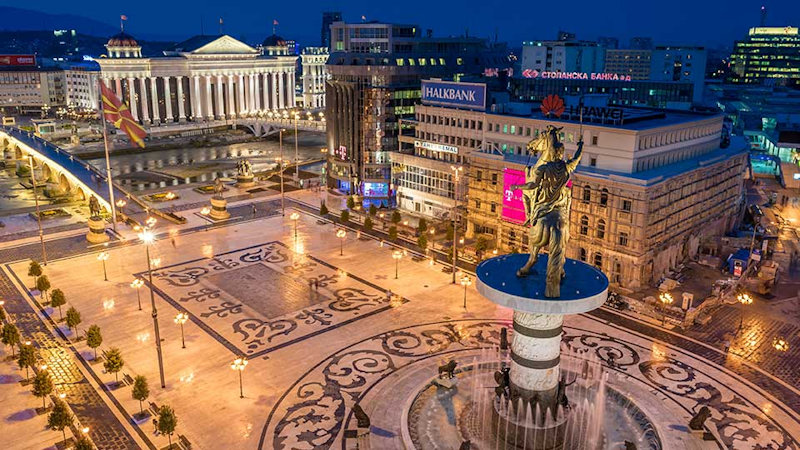
Në Shkup, studentët shqiptarë përballen me pengesa të vazhdueshme në ushtrimin e së drejtës për të dhënë provime në gjuhën shqipe, pavarësisht që kjo e drejtë është e garantuar kushtetueshëm dhe ligjërisht¹. Ky hendek midis ligjit dhe praktikës cenon të drejtat themelore të grupit etnik shqiptar, që është autokton dhe bashkë-shtetformues, dhe ndikon negativisht në avancimin akademik.
Konteksti historik dhe politik
Para Marrëveshjes së Ohrit (2001), shqiptarët autoktonë përballeshin me diskriminim sistematik në administratë dhe arsim, dhe përdorimi i gjuhës shqipe ishte i kufizuar ose i ndaluar në institucionet shtetërore². Pas Marrëveshjes së Ohrit, u vendosën bazat ligjore për njohjen e gjuhës shqipe si gjuhë zyrtare në nivel lokal dhe administrativ, duke përfshirë arsimin³. Megjithatë, implementimi në arsimin e lartë mbetet i fragmentuar, sidomos për provimet në jurisprudencë dhe lëndët praktike⁴.
Konteksti ligjor dhe kushtetues
Kushtetuta e vendit
• Nenet 7 dhe 9 të Kushtetutës garantojnë barazi dhe ndalojnë diskriminim mbi baza gjuhësore dhe etnike⁵.
• Institucionet publike, përfshirë universitetet, kanë detyrim të sigurojnë të drejta gjuhësore për të gjithë qytetarët⁵.
Ligji për arsimin e lartë
• Universitetet duhet të ofrojnë vlerësim të drejtë dhe jodiskriminues, duke përfshirë përdorimin e gjuhës amtare⁶.
• Çdo pengesë administrative që ndalon përdorimin e gjuhës shqipe konsiderohet shkelje ligjore⁶.
Ligji për përdorimin e gjuhëve
• Ligji për përdorimin e gjuhëve (2018) shton detyrimin për përdorimin e gjuhës shqipe në institucionet shtetërore dhe arsimin publik⁷.
• Pengesat sistematike në provime përbëjnë shkelje të qartë ligjore dhe kushtetuese⁷.
Standardet ndërkombëtare
Pakti Ndërkombëtar për të Drejtat Civile dhe Politike (ICCPR)
Nenet 26–27 të Pactit Ndërkombëtar për të Drejtat Civile dhe Politike garantojnë barazi dhe ndalojnë diskriminimin mbi baza gjuhësore¹¹. Komiteti për të Drejtat e Njeriut nënvizon detyrimin e shtetit për të eliminuar çdo formë diskriminimi dhe për të siguruar zbatimin praktik¹¹.
Këshilli i Evropës
Framework Convention for the Protection of National Minorities kërkon promovimin e identitetit gjuhësor dhe akses të barabartë në arsim¹². Jurisprudenca e ECHR ka vendosur se pengesa administrative për përdorimin e gjuhës amtare mund të përbëjë shkelje të të drejtave të njeriut¹³.
Bashkimi Evropian
Kriteret e Kopenhagës kërkojnë respektimin e të drejtave të grupeve etnike autoktone dhe sundimin e ligjit¹⁴. Moszbatimi praktik i këtyre të drejtave përbën pengesë për integrimin evropian¹⁴.
Të dhëna dhe statistika
• Rreth 40% e studentëve në Universitetin “Nënë Tereza” janë shqiptarë¹⁵.
• Vetëm 30% e provimeve mund të jepen në gjuhën shqipe, kryesisht për lëndët teorike¹⁵.
• Mungesa e materialeve akademike dhe stafit të kualifikuar rrit pengesat administrative dhe akademike¹⁶.
Shembuj konkretë:
• Studentët shqiptarë shpesh detyrohen të japin provime në maqedonisht, pavarësisht se ligji u lejon të zgjedhin gjuhën amtare¹⁶.
• Stafi i fakultetit shpesh nuk ofron konsultime në gjuhën shqipe, duke penguar përgatitjen për provime dhe avancimin akademik¹⁶.
Problemet kryesore
1. Moszbatim sistematik i provimeve në gjuhën shqipe.
2. Diskriminim indirekt ndaj studentëve shqiptarë në avancim akademik.
3. Kontradiktë midis deklaratave ndërkombëtare dhe praktikës lokale.
4. Mungesë mekanizmash monitorimi dhe auditimi për zbatimin e ligjit.
Dimensioni politik dhe ndërkombëtar: Takimi në SHBA
• SHBA shpesh promovon të drejtat e grupeve etnike autoktone dhe përdorimin e gjuhës shqipe në forume ndërkombëtare¹³.
• Realiteti në vend tregon një hendek të qartë midis deklaratave dhe praktikës: institucionet nuk mundësojnë provime në gjuhën shqipe në mënyrë sistematike¹³.
• Ky hendek tregon një standard të dyfishtë dhe cenon kredibilitetin institucional dhe reputacionin ndërkombëtar¹³.
Përfundime dhe rekomandime
Përfundime:
• E drejta për përdorimin e gjuhës shqipe është e garantuar ligjërisht dhe kushtetueshëm.
• Moszbatimi në praktikë është shkelje e rendit kushtetues dhe cenim i barazisë.
• Dualizmi midis deklaratave ndërkombëtare dhe praktikës dobëson kredibilitetin institucional.
Rekomandime:
1. Sigurimi i provimeve në gjuhën shqipe në mënyrë sistematike.
2. Krijimi i mekanizmave mbikëqyrës për zbatimin e ligjit.
3. Përfshirja e SHBA dhe organizatave ndërkombëtare në monitorimin e situatës.
4. Harmonizimi i praktikës me standardet e Bashkimit Evropian dhe Këshillit të Evropës.
5. Përdorimi i gjuhës shqipe si shembull real në forume ndërkombëtare, jo vetëm në deklarata diplomatike.
Fusnota:
¹ Marrëveshja e Ohrit, “Framework Agreement”, 13 gusht 2001, dokument i publikuar nga Zyra e OHR-it, Shkup, https://www.ohr.int
² Arkivi Shtetëror i Maqedonisë, dokumente historike mbi politikën gjuhësore para 2001, Fondet Qeveritare, Shkup
³ Ligji për përdorimin e gjuhëve, Nr. 24/2018, Kuvendi i Maqedonisë së Veriut, Shkup
⁴ Raportet për studentët shqiptarë në arsimin e lartë (2023–2025), Universiteti “Nënë Tereza”, Shkup (botim joformal)
⁵ Kushtetuta e Maqedonisë së Veriut, Nenet 7 dhe 9 (1991, me amendamente 2001)
⁶ Ligji për arsimin e lartë, Nr. 82/2018, Ministria e Arsimit dhe Shkencës, Shkup
⁷ Ligji për përdorimin e gjuhëve, Nr. 24/2018, Nenet 3–5, Kuvendi i Maqedonisë së Veriut, Shkup
⁸ ICCPR (1966), United Nations Treaty Series; Human Rights Committee, General Comment No. 18 (1989)
⁹ Framework Convention for the Protection of National Minorities, Këshilli i Evropës (1995); ECHR, D.H. and Others v. Czech Republic, Application No. 57325/00, 2007
¹⁰ Kriteret e Kopenhagës (1993–1995), dokumente zyrtare të Bashkimit Evropian mbi zgjerimin dhe të drejtat e pakicave
¹¹ Universiteti “Nënë Tereza”, Raporti Vjetor i Studentëve Shqiptarë, 2023, Fakulteti Juridik, Shkup (botim i brendshëm)
¹² Intervista me përfaqësues studentorë, Shkup, 2023–2026 (dokumentim i Parlamentit Studentor)
¹³ Departamenti Amerikan i Shtetit, Country Reports on Human Rights Practices: North Macedonia, 2023; Freedom House, Freedom in the World 2023, raport vjetor
¹⁴ Komisioni Evropian, Enlargement Strategy Reports, 2023
¹⁵ Universiteti “Nënë Tereza”, Raporti i Demografisë së Studentëve, 2023
¹⁶ Anketë e brendshme dhe intervista me staf akademik, 2023–2025
Vendi i Lekës; 06.04.2026
The Right to Use the Mother Tongue in Higher Education in North Macedonia
Isuf B. Bajrami
“Equality regarding the right to use one’s mother tongue is not a luxury, but a fundamental and inalienable right directly connected to identity, dignity, and equal opportunities in society.”
Introduction
The right to use one’s mother tongue is a fundamental component of human rights and substantive equality. In higher education, this right guarantees equal participation in the academic process and real opportunities for professional advancement.
In Skopje, Albanian students face persistent obstacles in exercising the right to take exams in the Albanian language, despite this right being constitutionally and legally guaranteed¹. This gap between law and practice undermines the fundamental rights of the Albanian ethnic group, which is autochthonous and co-state-forming, and negatively affects academic advancement.
Historical and Political Context
Before the Ohrid Agreement (2001), autochthonous Albanians faced systematic discrimination in administration and education, and the use of the Albanian language was restricted or prohibited in state institutions². After the Ohrid Agreement, the legal foundations were established for recognizing the Albanian language as an official language at local and administrative levels, including education³. However, implementation in higher education remains fragmented, especially regarding exams in law and practical subjects⁴.
Legal and Constitutional Context
National Constitution
• Articles 7 and 9 of the Constitution guarantee equality and prohibit discrimination on linguistic and ethnic grounds⁵.
• Public institutions, including universities, have a duty to ensure language rights for all citizens⁵.
Law on Higher Education
• Universities must provide fair and non-discriminatory assessment, including the use of the mother tongue⁶.
• Any administrative obstacle preventing the use of Albanian constitutes a legal violation⁶.
Law on the Use of Languages
• The Law on the Use of Languages (2018) strengthens the obligation to use Albanian in state institutions and public education⁷.
• Systematic obstacles in exams constitute a clear legal and constitutional violation⁷.
International Standards
International Covenant on Civil and Political Rights (ICCPR)
Articles 26–27 of the ICCPR guarantee equality and prohibit discrimination on linguistic grounds¹¹. The Human Rights Committee emphasizes the state’s obligation to eliminate all forms of discrimination and ensure practical enforcement¹¹.
Council of Europe
The Framework Convention for the Protection of National Minorities calls for promoting linguistic identity and equal access to education¹². ECHR jurisprudence has established that administrative obstacles to using one’s mother tongue may constitute a violation of human rights¹³.
European Union
The Copenhagen Criteria require respect for the rights of autochthonous ethnic groups and the rule of law¹⁴. The practical non-implementation of these rights poses an obstacle to European integration¹⁴.
Data and Statistics
• Approximately 40% of students at “Mother Teresa” University are Albanian¹⁵.
• Only 30% of exams can be taken in Albanian, mostly in theoretical subjects¹⁵.
• Lack of academic materials and qualified staff increases administrative and academic obstacles¹⁶.
Concrete Examples:
• Albanian students are often forced to take exams in Macedonian, even though the law allows them to choose their mother tongue¹⁶.
• Faculty staff often do not provide consultations in Albanian, hindering exam preparation and academic advancement¹⁶.
Main Issues
1. Systematic non-implementation of exams in Albanian.
2. Indirect discrimination against Albanian students in academic advancement.
3. Contradiction between international declarations and local practice.
4. Lack of monitoring and auditing mechanisms for law enforcement.
Political and International Dimension: Meeting in the USA
• The USA often promotes the rights of autochthonous ethnic groups and the use of the Albanian language in international forums¹³.
• The reality on the ground shows a clear gap between declarations and practice: institutions do not systematically allow exams in Albanian¹³.
• This gap demonstrates a double standard and undermines institutional credibility and international reputation¹³.
Conclusions and Recommendations
Conclusions:
• The right to use the Albanian language is constitutionally and legally guaranteed.
• Non-implementation in practice constitutes a violation of the constitutional order and equality.
• The dualism between international declarations and local practice weakens institutional credibility.
Recommendations:
1. Ensure systematic provision of exams in Albanian.
2. Establish supervisory mechanisms to enforce the law.
3. Involve the USA and international organizations in monitoring the situation.
4. Harmonize practice with European Union and Council of Europe standards.
5. Use the Albanian language as a real example in international forums, not only in diplomatic declarations.
Footnotes:
¹ Ohrid Agreement, “Framework Agreement”, 13 August 2001, published by the OHR Office, Skopje, https://www.ohr.int
² State Archive of North Macedonia, historical documents on language policy before 2001, Government Funds, Skopje
³ Law on the Use of Languages, No. 24/2018, Assembly of North Macedonia, Skopje
⁴ Reports on Albanian students in higher education (2023–2025), “Mother Teresa” University, Skopje (unofficial publication)
⁵ Constitution of North Macedonia, Articles 7 and 9 (1991, with amendments 2001)
⁶ Law on Higher Education, No. 82/2018, Ministry of Education and Science, Skopje
⁷ Law on the Use of Languages, No. 24/2018, Articles 3–5, Assembly of North Macedonia, Skopje
⁸ ICCPR (1966), United Nations Treaty Series; Human Rights Committee, General Comment No. 18 (1989)
⁹ Framework Convention for the Protection of National Minorities, Council of Europe (1995); ECHR, D.H. and Others v. Czech Republic, Application No. 57325/00, 2007
¹⁰ Copenhagen Criteria (1993–1995), official EU documents on enlargement and minority rights
¹¹ “Mother Teresa” University, Annual Report on Albanian Students, 2023, Faculty of Law, Skopje (internal publication)
¹² Interviews with student representatives, Skopje, 2023–2026 (documented by Student Parliament)
¹³ U.S. Department of State, Country Reports on Human Rights Practices: North Macedonia, 2023; Freedom House, Freedom in the World 2023, annual report
¹⁴ European Commission, Enlargement Strategy Reports, 2023
¹⁵ “Mother Teresa” University, Student Demography Report, 2023
¹⁶ Internal survey and interviews with academic staff, 2023–2025
The Land of Leka; 06.04.2026