



 [ Libra NëLinjë ]
 Isuf B. Bajrami
Rëndësia strategjike e ngushticave
1. Hyrje
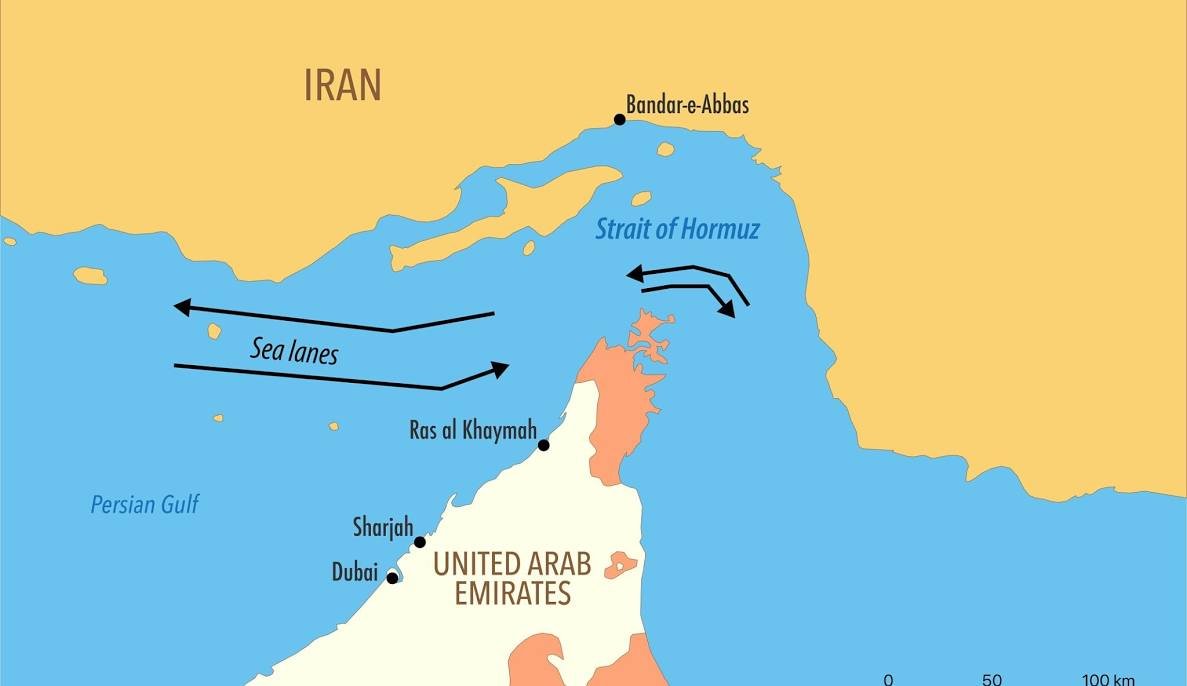
Ngushticat e Hormuzit dhe Bab al‑Mandabit janë chokepoints detare me rëndësi kyçe për stabilitetin ekonomik dhe energjetik global. Ngushtica e Hormuzit lidh Gjirin Persik me Gjirin e Omanit dhe është rruga ekskluzive detare për eksportet e naftës dhe gazit nga rajoni; rreth 20–25 % e tregtisë globale të naftës dhe LNG-së kalon aty çdo vit¹. Ndërprerja e këtij chokepoint-i krijon shokje të menjëhershme në çmimet globale të energjisë, duke rritur presionin mbi vendet importuese dhe duke destabilizuar tregjet financiare.
Bab al‑Mandab, nga ana tjetër, lidh Detin e Kuq me Gjirin e Adenit dhe përfaqëson një nyje kritike për transportin drejt Kanali i Suezit, ku kryhet pjesa më e madhe e tregtisë ndërkombëtare². Ndërprerja e këtij strait-i do të ndikonte në logjistikën e mallrave dhe zinxhirët e furnizimit, veçanërisht për energjinë dhe mallrat industriale.
Një skenar bllokimi dyfishtë konsiderohet situatë ekstreme me implikime globale, duke përfshirë presion ekonomik, destabilizim politik dhe rritje të rrezikut ushtarak.
2. Rusia: përfitues strukturor dhe aktor i oportunizmit strategjik
2.1. Analiza teoretike e oportunizmit
Nga perspektiva e teorive realiste dhe gjeoekonomike, fuqitë e mëdha përfitojnë nga dobësitë strukturore të sistemit ndërkombëtar³. Rusia mund të përfitojë nga rritja e çmimeve të energjisë në rast të ndërprerjes së Hormuzit, duke:
• Forcuar bilancin e pagesave dhe të ardhurat fiskale,
• Afirmuar veten si furnizues alternativ për tregjet evropiane dhe aziatike,
• Përdorur krizën për të rritur ndikimin diplomatik.
2.2. Rrjeti pragmatik i ndikimit dhe aktorët rajonalë
Rusia ka ndërtuar një rrjet heterogjen me aktorë shtetërorë, jo-shtetërorë dhe organizata ekstremiste, të cilët kontribuojnë në efektin kumulativ të destabilizimit:
• Aleatët shtetërorë: Iran, si aktor kryesor që ka kapacitetin për të kërcënuar navigacionin në Hormuz dhe mund të mobilizojë influencën rajonale në Bab al‑Mandab.
• Grupet ekstremiste dhe terroristike: Aktiviteti i Houthis në Jemen ka dëshmuar aftësi për të ndërprerë trafikun detar në Bab al‑Mandab, duke përdorur sulme raketore dhe miniera detare⁶. Në të njëjtin rajon, Al-Shabaab në Somali ka synuar anije tregtare dhe linja detare, duke rritur koston e sigurimit dhe duke destabilizuar rrjedhën logjistike.
• Aktivistë jo-shtetërorë me agjendë politike ose ideologjike: Përfshijnë grupime të ndryshme që përdorin veprime asimetrike për të ushtruar presion mbi vendet dhe kompanitë ndërkombëtare që kalojnë përmes ngushticave.
Ky rrjet nuk është komanduar qendrorisht, por efektet kumulative shpërndajnë rrezikun dhe amplifikojnë ndikimin e Rusisë, pa nevojën për prezencë ushtarake direkte.
3. Serbia: amplifikator politik dhe faktor destabilizimi rajonal
Serbia nuk ka kapacitet operativ për ngushticat detare, por ka një rol informacional dhe politik. Qasja e saj historike dhe strukturore ndaj Rusisë është thelbësore për ndikimin e rrjetit:
• Serbia mbështet narrative pro-ruse në nivel diplomatik dhe amplifikon sfidat e Perëndimit në Ballkan⁴.
• Në skenarë krize, Serbia funksionon si amplifikator politik, duke ndikuar në opinionin rajonal dhe duke krijuar hapësirë ku rrjeti i ndikimit rus mund të veprojë.
• Ky rol i jep rrjetit një dimension stabilizues të propagandës, që lejon manipulimin e perceptimeve ndërkombëtare dhe rritjen e presionit mbi vendet importuese të energjisë⁵.
4. Mekanizmat e ndikimit të rrjetit dhe dimensioni ekstrem
Ky rrjet ka dimensione të shumta:
• Ekonomik: Ndërprerja e Hormuzit dhe Bab al-Mandab rrit kostot e transportit, sigurimit dhe zinxhirëve globalë të furnizimit.
• Politik dhe informacional: Narrative dhe dezinformim që krijojnë polarizim dhe dobësojnë institucionet multilaterale.
• Ushtarak dhe sigurimor: Organizatat ekstremiste dhe terroristike veprojnë si forcë shpërndarëse destabilizimi, ndërsa reagimi ndërkombëtar mund të rikthejë lirinë e navigimit, por me kosto të konsiderueshme.
Ky kombinim i aktorëve shtetërorë dhe jo-shtetërorë, duke përfshirë grupe ekstremiste dhe organizatë terroriste, krijon një sistem kumulativ destabilizues, që forcon pozicionin e Rusisë dhe të aleatëve të saj.
5. Implikimet dhe kufizimet
Një krizë e dyfishtë do të shkaktojë:
• Rritje të çmimeve të energjisë dhe presion inflacionist në ekonomitë importuese,
• Ndërprerje zinxhirësh globalë të furnizimit,
• Dobësim të kohezionit politik dhe ekonomik perëndimor.
Kufizimet e skenarit përfshijnë:
• Rusia nuk kontrollon drejtpërdrejt vendimet e aktorëve jo-shtetërorë dhe terroristëve,
• Reagimi ndërkombëtar mund të zbusë disa efekte,
• Rrugët alternative dhe rezervat strategjike të energjisë mund të amortizojnë ndërprerjet e menjëhershme.
6. Analiza e efektit të veprimeve ekstremiste në Bab al‑Mandab: Houthis, Al‑Shabaab dhe aktorë të tjerë
Në kontekstin e një skenari ekstrem, aktorët jo-shtetërorë kanë një ndikim të drejtpërdrejtë dhe të matshëm mbi trafikun detar global:
6.1. Houthis (Ansar Allah)
• Sulme me raketa, dronë dhe miniera detare ndaj anijeve tregtare në Bab al‑Mandab⁶.
• Ndërprerje të shërbimeve të transportit detar dhe devijim të linjave drejt rrugëve më të gjata.
• Rritje të kostove të sigurimit dhe tarifave “war risk”.
6.2. Al‑Shabaab dhe aktorë të tjerë ekstremistë
• Nuk ka sulme të drejtpërdrejta ndaj anijeve në Bab al‑Mandab, por kontribuon në pasigurinë rajonale, duke rritur kostot operative dhe presionin psikologjik për operatorët detarë⁷.
6.3. Efektet ekonomike dhe operacionale
• Devijime të trafikut që zgjasin kohën e transportit dhe rrisin kostot³.
• Rritje e tarifave të sigurimit për zonat me rrezik të lartë.
• Ndikim në tregjet globale të energjisë dhe mallrave, duke rritur çmimet dhe presionin ekonomik⁸.
Sponsorimi dhe ndikimi i Rusisë dhe partnerëve të saj si Irani ndaj grupeve që veprojnë në Bab al‑Mandab shton dimensoni geopolitik të këtyre sulmeve, duke i dhënë atyre një rol jo vetëm kriminal apo terrorist, por edhe politiko-strategjik në një konflikt më të gjerë ndërkombëtar.
7. Përfundim
Në këtë skenar ekstrem, fuqia matet jo vetëm nga kontrolli territorial, por edhe nga aftësia për të manipuluar dobësitë e sistemit global. Rusia funksionon si përfitues strukturor dhe katalizator indirekt, Serbia si amplifikator politik rajonal, dhe aktorët ekstremistë si forca jo-lineare që amplifikon presionin global. Ky rrjet heterogjen ilustron konceptin e fuqisë së shpërndarë, ku rezultatet e destabilizimit varen nga ndërveprimet e shumëfishta midis aktorëve shtetërorë dhe jo-shtetërorë.
Fusnota:
¹ Wikipedia contributors. Strait of Hormuz. Wikipedia. https://en.wikipedia.org/wiki/Strait_of_Hormuz
² Wikipedia contributors. Bab el-Mandeb. Wikipedia. https://en.wikipedia.org/wiki/Bab-el-Mandeb
³ Mearsheimer, J. (2014). The Tragedy of Great Power Politics. W.W. Norton & Company.
⁴ Djordjevic, M. (2022). Serbia’s Foreign Policy in a Multipolar World. DOAJ. https://doaj.org/article/5255cc4bc61e45b9a6cc61fab49b625b
⁵ Pavlović, S. (2021). Balancing between East and West: Serbia’s Geopolitical Strategy. International Affairs, 101(6), 2300–2318. https://academic.oup.com/ia/article/101/6/2300/8315408
⁶ International Crisis Group. (2022). Yemen’s Maritime Chokepoints and the Houthi Threat. https://www.crisisgroup.org/middle-east-north-africa/gulf-and-arabian-peninsula/yemen/
⁷ UN Security Council. (2021). Threats posed by Al-Shabaab to Maritime Security in the Horn of Africa. https://www.un.org/securitycouncil
⁸ BBC Monitoring. (2023). Impact of Houthi Attacks on Global Shipping and Oil Prices. https://www.bbc.com/news/world-middle-east-64723148
Vendi i Lekës, 22.03.2026
ENGLISH
Russia, Serbia, and Their Network of Allies in an Extreme Scenario of Strait Closures: Hormuz and Bab al-Mandab
Isuf B. Bajrami
Strategic Importance of the Straits
1. Introduction
The Straits of Hormuz and Bab al-Mandab are critical maritime chokepoints for global economic and energy stability. The Strait of Hormuz connects the Persian Gulf to the Gulf of Oman and is the exclusive maritime route for the export of oil and gas from the region; approximately 20–25 % of global oil and LNG trade passes through it annually¹. Disruption of this chokepoint would cause immediate shocks to global energy prices, exerting pressure on importing nations and destabilizing financial markets.
Bab al-Mandab, in turn, connects the Red Sea with the Gulf of Aden and represents a critical node for transport towards the Suez Canal, through which the majority of intercontinental trade flows². Any interruption in this strait would affect cargo logistics and supply chains, particularly for energy and industrial commodities.
A dual closure scenario is considered an extreme event with global implications, including economic pressure, political destabilization, and increased military risk.
2. Russia: Structural Beneficiary and Strategic Opportunist
2.1. Theoretical Analysis of Opportunism
From the perspective of realist and geoeconomic theories, great powers capitalize on structural vulnerabilities in the international system³. Russia could benefit from rising energy prices in the event of a Hormuz disruption by:
• Strengthening its balance of payments and fiscal revenues,
• Positioning itself as an alternative supplier to European and Asian markets,
• Leveraging the crisis to increase diplomatic influence.
2.2. Practical Network of Influence and Regional Actors
Russia has built a heterogeneous network involving state, non-state, and extremist actors, contributing to the cumulative destabilization effect:
• State allies: Iran is a key actor capable of threatening navigation through Hormuz and mobilizing regional influence near Bab al-Mandab.
• Extremist and terrorist groups: Activities of the Houthis in Yemen have demonstrated the ability to disrupt maritime traffic through Bab al-Mandab using missile attacks and naval mines⁶. In the same region, Al-Shabaab in Somalia has targeted commercial vessels and shipping lines, increasing insurance costs and destabilizing logistics.
• Non-state actors with political or ideological agendas: Various groups use asymmetric actions to exert pressure on countries and international companies navigating the straits.
This network is not centrally commanded, but its cumulative effects disperse risk and amplify Russia’s influence without requiring direct military presence.
3. Serbia: Political Amplifier and Regional Destabilization Factor
Serbia lacks operational capacity over the straits but plays an informational and political role. Its historical and structural alignment with Russia is central to the network’s influence:
• Serbia supports pro-Russian narratives diplomatically and amplifies Western challenges in the Balkans⁴.
• In crisis scenarios, Serbia functions as a political amplifier, influencing regional opinion and creating space for Russia’s influence network to operate.
• This role provides the network with a propaganda-stabilizing dimension, enabling manipulation of international perceptions and increased pressure on energy-importing countries⁵.
4. Mechanisms of Network Influence and Extreme Dimension
The network operates across multiple dimensions:
• Economic: Disruption of Hormuz and Bab al-Mandab increases transportation, insurance, and global supply chain costs.
• Political and informational: Narrative control and disinformation create polarization and weaken multilateral institutions.
• Military and security: Extremist and terrorist organizations act as dispersed destabilizing forces, while international responses can restore freedom of navigation, albeit at substantial cost.
This combination of state and non-state actors, including extremist groups and terrorist organizations, forms a cumulative destabilizing system, reinforcing Russia’s position and that of its allies.
5. Implications and Limitations
A dual-crisis scenario would cause:
• Rising energy prices and inflationary pressure in importing economies,
• Global supply chain disruptions,
• Weakening of Western political and economic cohesion.
Limitations of the scenario include:
• Russia does not directly control decisions of non-state and terrorist actors,
• International responses may mitigate some effects,
• Alternative routes and strategic reserves may absorb immediate disruptions.
6. Analysis of Extremist Actions in Bab al-Mandab: Houthis, Al-Shabaab, and Other Actors
In an extreme scenario, non-state actors have a direct and measurable impact on global maritime traffic:
6.1. Houthis (Ansar Allah)
• Missile, drone, and naval mine attacks against commercial vessels in Bab al-Mandab⁶.
• Disruption of shipping services and diversion of routes to longer paths.
• Increased insurance costs and “war risk” premiums.
6.2. Al-Shabaab and Other Extremist Actors
• No direct attacks on vessels in Bab al-Mandab, but contribute to regional insecurity, raising operational costs and psychological pressure on maritime operators⁷.
6.3. Economic and Operational Effects
• Shipping diversions that extend transit time and increase costs³.
• Higher insurance premiums for high-risk areas.
• Impact on global energy and commodity markets, raising prices and economic pressure⁸.
The sponsorship and influence of Russia and its partners, such as Iran, on groups operating in Bab al-Mandab add a geopolitical dimension, making these actions not merely criminal or terrorist, but also politically and strategically significant in a broader international conflict.
7. Conclusion
In this extreme scenario, power is measured not only by territorial control but also by the ability to manipulate global systemic vulnerabilities. Russia functions as a structural beneficiary and indirect catalyst, Serbia as a regional political amplifier, and extremist actors as a non-linear force amplifying global pressure. This heterogeneous network illustrates the concept of distributed power, where destabilization outcomes depend on multiple interactions between state and non-state actors.
Footnotes:
¹ Wikipedia contributors. Strait of Hormuz. Wikipedia. https://en.wikipedia.org/wiki/Strait_of_Hormuz
² Wikipedia contributors. Bab el-Mandeb. Wikipedia. https://en.wikipedia.org/wiki/Bab-el-Mandeb
³ Mearsheimer, J. (2014). The Tragedy of Great Power Politics. W.W. Norton & Company.
⁴ Djordjevic, M. (2022). Serbia’s Foreign Policy in a Multipolar World. DOAJ. https://doaj.org/article/5255cc4bc61e45b9a6cc61fab49b625b
⁵ Pavlović, S. (2021). Balancing between East and West: Serbia’s Geopolitical Strategy. International Affairs, 101(6), 2300–2318. https://academic.oup.com/ia/article/101/6/2300/8315408
⁶ International Crisis Group. (2022). Yemen’s Maritime Chokepoints and the Houthi Threat. https://www.crisisgroup.org/middle-east-north-africa/gulf-and-arabian-peninsula/yemen/
⁷ UN Security Council. (2021). Threats posed by Al-Shabaab to Maritime Security in the Horn of Africa. https://www.un.org/securitycouncil
⁸ BBC Monitoring. (2023). Impact of Houthi Attacks on Global Shipping and Oil Prices. https://www.bbc.com/news/world-middle-east-64723148
The Land of Leka; 22.03.2026