



 [ Libra NëLinjë ]

Isuf B. Bajrami
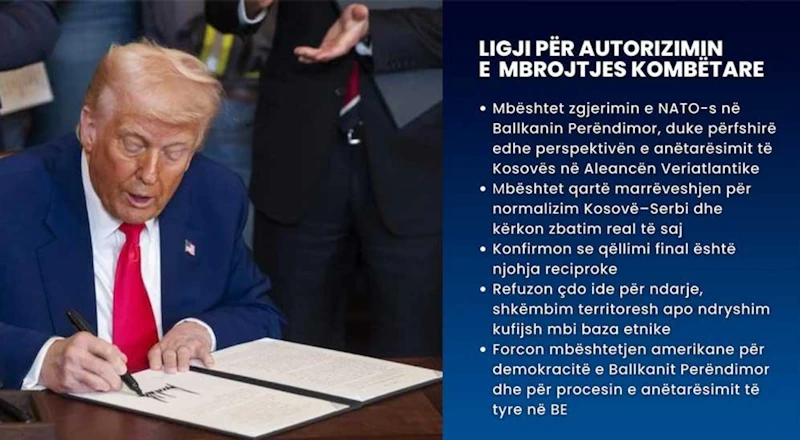
Përfshirjen e Republikës së Kosovës në Ligjin Amerikan për Autorizimin e Mbrojtjes Kombëtare (NDAA) për vitin fiskal 2026, duke u bazuar në kuadrin e së drejtës kushtetuese të Shteteve të Bashkuara të Amerikës dhe në normat e së drejtës ndërkombëtare publike. Ky shqyrtim është i orientuar drejt identifikimit të implikimeve juridike, politike dhe ndërkombëtare që rrjedhin nga përfshirja e Kosovës në këtë akt ligjor, duke u fokusuar në çështje kyçe si sovraniteti, integriteti territorial, vetëvendosja legjitime, mosnjohja e situatave të paligjshme dhe pjesëmarrja e Kosovës në arkitekturën e sigurisë kolektive euro-atlantike.
Përfshirja e Kosovës në NDAA nuk është thjesht një akt politik i Kongresit Amerikan, por gjithashtu përfaqëson një shprehje të bindur të vullnetit sovran kushtetues të SHBA-së dhe të përputhjes së saj me normat ndërkombëtare të njohura, duke krijuar një bazë juridike që fuqizon:
- Statusin ndërkombëtar të Republikës së Kosovës si subjekt i së drejtës ndërkombëtare, në përputhje me kriteret e Konventës së Montevideo (1933) për shtetësinë, duke përfshirë territorin e përcaktuar, popullsinë e përhershme, qeverisjen efektive dhe aftësinë për të hyrë në marrëdhënie me shtetet e tjera.ⁱ Montevideo Convention on the Rights and Duties of States, 1933.
- Integritetin territorial të Kosovës si normë peremptore (jus cogens) dhe si interes erga omnes të komunitetit ndërkombëtar, të cilat nuk lejojnë devijim dhe garantojnë mbrojtje nga çdo ndryshim i detyruar apo ndërhyrje mbi bazë etnike.ⁱⁱ ICJ, Advisory Opinion, East Timor, ICJ Rep. 1995, p. 102; ICJ, Barcelona Traction, ICJ Rep. 1970, p. 32.
- Parashikueshmërinë dhe stabilitetin juridik në marrëdhëniet ndërkombëtare, duke lidhur politikën e jashtme amerikane me detyrimet ndërkombëtare dhe duke krijuar një standard të besueshmërisë ligjore (international legal reliability) për aktorët ndërkombëtarë.
- Parandalimin e paligjshmërisë dhe mbrojtjen kundër çdo pretendimi separatist që cenon rendin juridik ndërkombëtar, në përputhje me doktrinën e mosnjohjes së situatave të paligjshme sipas Draft-Artikujve të Komisionit të së Drejtës Ndërkombëtare mbi përgjegjësinë e shteteve.ⁱⁱⁱ Draft Articles on Responsibility of States for Internationally Wrongful Acts, ILC, 2001, Arts. 41-42.
- Integrimin euro-atlantik dhe arkitekturën e sigurisë kolektive, duke vlerësuar të drejtën sovrane të Kosovës për të zgjedhur aleancat e saj politike dhe të sigurisë në përputhje me parimin e autonomisë strategjike të shteteve sovrane dhe me praktikat e sigurisë së pandashme (indivisible security).ⁱⁱⁱⁱ Helsinki Final Act, 1975, Principle of Indivisible Security; NATO Strategic Concept documents.
Ky opinion ka për qëllim të ofrojë një analizë të thelluar juridike dhe ndërkombëtare, duke e lidhur politikën amerikane të mbrojtjes me parimet ligjore globale dhe duke evidentuar efektin normativ, preventiv dhe stabilizues të NDAA për Kosovën dhe rajonin e Ballkanit. Ai gjithashtu synon të ofrojë një udhërrëfyes për institucionet ndërkombëtare dhe aktorët politikë mbi mënyrën se si përfshirja e Kosovës në aktet ligjore të SHBA-së mund të kontribuojë në konsolidimin e një rendi ndërkombëtar të bazuar në rregulla, duke forcuar sovranitetin, integritetin territorial dhe stabilitetin rajonal. Në dritën e së drejtës kushtetuese dhe të së drejtës ndërkombëtare publike.
- Kuadri Normativ
Ligji për Autorizimin e Mbrojtjes Kombëtare të Shteteve të Bashkuara të Amerikës (NDAA) për vitin fiskal 2026 është një akt ligjor federal i miratuar në përputhje me Kushtetutën e SHBA-së, që përcakton politika detyruese dhe prioritete strategjike në fushën e mbrojtjes kombëtare dhe sigurisë ndërkombëtare.1.Kushtetuta e SHBA-së, Artikulli I, §8; National Defense Authorization Acts (praktikë ligjore e përgjithshme).
Përfshirja e Republikës së Kosovës brenda këtij kuadri legjislativ vendos politikën amerikane ndaj Kosovës në një strukturë normative dhe kushtetuese, duke i dhënë asaj qëndrueshmëri, siguri juridike dhe vazhdimësi institucionale.
- Shtetësia dhe Sovraniteti
Brenda NDAA-së, Republika e Kosovës trajtohet si subjekt i së drejtës ndërkombëtare publike, në përputhje me kriteret e përcaktuara në Konventën e Montevideos mbi të Drejtat dhe Detyrimet e Shteteve (1933): territor i përcaktuar, popullsi e përhershme, qeveri efektive dhe aftësi për të hyrë në marrëdhënie me shtete të tjera.2. Konventa e Montevideos mbi të Drejtat dhe Detyrimet e Shteteve, 1933, Art. 1.
Ky trajtim përbën:
- njohje funksionale të sovranitetit të Kosovës;
- afirmim të personalitetit të saj juridik ndërkombëtar; dhe
- përforcim të kapacitetit për veprim brenda rendit juridik ndërkombëtar.
III. Integriteti Territorial dhe Parimi i Uti Possidetis Juris
Kundërshtimi i NDAA-së ndaj ndarjes territoriale, shkëmbimit të territoreve ose ndryshimit të kufijve mbi baza etnike është në përputhje të plotë me:
- parimin e integritetit territorial të shteteve, të sanksionuar në Nenin 2(4) të Kartës së Kombeve të Bashkuara;3. Kartë e Kombeve të Bashkuara, Neni 2(4). dhe
- parimin e uti possidetis juris, i cili ruan kufijtë administrativ ekzistues në momentin e krijimit të shtetit.4. Gjykata Ndërkombëtare e Drejtësisë (GJND), Frontier Dispute (Burkina Faso/Mali), Vendim, 1986.
Këto parime konsiderohen pjesë e normave imperative të së drejtës ndërkombëtare (jus cogens), nga të cilat nuk lejohet devijim dhe që përbëjnë shtylla themelore të stabilitetit ndërkombëtar.5. Konventa e Vjenës mbi të Drejtën e Traktateve, 1969, Neni 53.
- Ndalimi i Rikonfigurimit Territorial mbi Baza Etnike
Refuzimi i NDAA-së për ndryshime territoriale mbi baza etnike përputhet me ndalimin ndërkombëtar të praktikave që cenojnë:
- barazinë sovrane të shteteve;
- të drejtat themelore të njeriut; dhe
- parimin e mosdiskriminimit.6. Kartë e OKB-së, Nenet 1(2), 2(1).
Ky ndalim pasqyron mësimet e nxjerra nga përvoja historike e Ballkanit Perëndimor dhe shërben si mekanizëm juridik parandalues kundër konflikteve të rinovuara, pastrimeve etnike dhe destabilizimit rajonal.7. Jurisprudenca e ICTY-së; Rezoluta të Asamblesë së Përgjithshme të OKB-së mbi pastrime etnike.
- Zgjidhja Paqësore e Mosmarrëveshjeve
NDAA riafirmon parimin e zgjidhjes paqësore të mosmarrëveshjeve ndërkombëtare, në përputhje me:
- Nenin 2(3) të Kartës së OKB-së;8. Kartë e OKB-së, Neni 2(3).
- ndalimin e kërcënimit ose përdorimit të forcës; dhe
- praktikën diplomatike ndërkombëtare të konsoliduar.
Brenda këtij kuadri, dialogu Kosovë–Serbi duhet të zhvillohet duke respektuar:
- sovranitetin e Republikës së Kosovës;
- barazinë juridike të palëve; dhe
- interesin erga omnes të komunitetit ndërkombëtar për paqe dhe stabilitet rajonal.9. GJND, East Timor (Portugal v. Australia), Vendim, 1995.
- Mosndërhyrja dhe Kundërveprimi ndaj Ndikimeve Destabilizuese
Dispozitat që autorizojnë masa kundër ndikimeve destabilizuese të palëve të treta janë në përputhje me:
- parimin e mosndërhyrjes në punët e brendshme të shteteve;10. GJND, Nicaragua v. United States, Vendim, 1986.
- të drejtën e shteteve për të marrë pjesë në mekanizma të sigurisë kolektive; dhe
- ruajtjen e një rendi ndërkombëtar të bazuar në rregulla.
Në këtë kontekst, Kosova njihet si komponent përbërës i sigurisë kolektive euro-atlantike.
VII. Integrimi Euro-Atlantik si Shprehje e Zgjedhjes Sovrane
Mbështetja për integrimin e Kosovës në NATO dhe Bashkimin Evropian përfaqëson ushtrim të të drejtës sovrane të shtetit për të përcaktuar orientimin politik dhe të sigurisë, në përputhje me:
- Aktin Final të Helsinkit (1975);11. Konferenca mbi Sigurinë dhe Bashkëpunimin në Evropë, Akti Final i Helsinkit, 1975.
- parimin e vetëvendosjes së brendshme; dhe
- autonominë strategjike të shteteve sovrane.
VIII. Efekti Juridik Ndërkombëtar (Opinio Juris)
Përfshirja e Kosovës në NDAA përbën shprehje të qartë të opinio juris të Shteteve të Bashkuara në favor të:
- shtetësisë së Republikës së Kosovës;
- paprekshmërisë së integritetit territorial; dhe
- mosndryshimit të kufijve me forcë ose mbi baza etnike.12. GJND, North Sea Continental Shelf Cases, 1969.
Ky qëndrim kontribuon në konsolidimin e praktikës ndërkombëtare dhe forcon pozitën e Kosovës në forumet multilaterale dhe ndërkombëtare.
- Karakteri Erga Omnes i Integritetit Territorial të Kosovës
Integriteti territorial i Republikës së Kosovës përbën jo vetëm një të drejtë shtetërore individuale, por edhe një interes të komunitetit ndërkombëtar në tërësi (erga omnes), sipas doktrinës së zhvilluar nga Gjykata Ndërkombëtare e Drejtësisë (GJND), veçanërisht në çështjet Barcelona Traction dhe East Timor.13. GJND, North Sea Continental Shelf Cases, 1969.
Dispozitat e NDAA-së që mbrojnë kufijtë e Kosovës forcojnë këtë karakter erga omnes, duke e vendosur mbrojtjen e integritetit territorial në një nivel që tejkalon marrëdhëniet dypalëshe.
- Vetëvendosja dhe Ndarja nga Secesioni i Paligjshëm
E drejta e vetëvendosjes së popullit të Kosovës, e ushtruar në kontekstin e shpërbërjes së ish-Jugosllavisë dhe nën mbikëqyrje ndërkombëtare, përbën një rast sui generis në të drejtën ndërkombëtare.14. GJND, Accordance with International Law of the Unilateral Declaration of Independence in Respect of Kosovo, Opinion Advisory, 2010.
Përfshirja e Kosovës në NDAA:
- konfirmon karakterin jo-secesionist të paligjshëm të shtetësisë së Kosovës;
- dallon qartë Kosovën nga pretendime separatiste të tjera që cenojnë integritetin territorial të shteteve ekzistuese;
- mbështet doktrinën e vetëvendosjes riparuese (remedial secession) si reagim ndaj shkeljeve të rënda dhe sistematike të të drejtave themelore.15. A. Buchanan, Justice, Legitimacy, and Self-Determination, Oxford University Press.
- Marrëdhënia ndërmjet së Drejtës Kushtetuese Amerikane dhe së Drejtës Ndërkombëtare
NDAA, si akt i Kongresit të SHBA-së, përfaqëson shprehje të vullnetit sovran kushtetues të një shteti me rol qendror në rendin ndërkombëtar.
Kodifikimi i politikës amerikane ndaj Kosovës:
- krijon koherencë ndërmjet së drejtës së brendshme dhe detyrimeve ndërkombëtare;
- shndërron qëndrimet politike në norma veprimi për administratën federale;
- forcon besueshmërinë juridike ndërkombëtare të SHBA-së.16. Restatement (Third) of the Foreign Relations Law of the United States.
XII. Detyrimi për Mosnjohje të Situatave të Paligjshme
Refuzimi i ndryshimit të kufijve dhe ndarjes territoriale përputhet me parimin ndërkombëtar të mosnjohjes së situatave të krijuara në kundërshtim me normat jus cogens, siç është formuluar në Draft-Artikujt e Komisionit të së Drejtës Ndërkombëtare mbi përgjegjësinë e shteteve.17. Draft-Artikujt e ILC-së mbi Përgjegjësinë e Shteteve për Veprimet Ndërkombëtare të Paligjshme, Nenet 40–41.
Në këtë kuptim:
- çdo tentativë për cenimin e territorit të Kosovës do të ishte juridikisht e pavlefshme;
- shtetet kanë detyrim negativ për të mos e njohur një situatë të tillë;
- NDAA kontribuon në parandalimin normativ të këtyre skenarëve.
XIII. Siguria Kolektive dhe NATO
Përfshirja e Kosovës në kuadrin strategjik të NDAA-së e pozicionon atë brenda arkitekturës së sigurisë kolektive euro-atlantike.
Nga këndvështrimi juridik:
- siguria e Kosovës lidhet drejtpërdrejt me sigurinë rajonale;
- kërcënimet ndaj Kosovës trajtohen si çështje me implikime ndërkombëtare;
- kjo përputhet me konceptin e sigurisë së pandashme (indivisible security).18. Koncepti Strategjik i NATO-s; Dokumente OSCE mbi sigurinë e pandashme.
XIV. Efekti Preventiv dhe Stabilizues i Normës
Një aspekt thelbësor juridik i NDAA-së është efekti i saj preventiv, që buron nga:
- qartësia normative;
- autoriteti institucional i SHBA-së;
- lidhja e politikës së jashtme me të drejtën e brendshme.
Ky efekt shërben si:
- pengesë juridiko-politike ndaj aventurave territoriale;
- garanci për paqe afatgjatë;
- sinjal i fortë për aktorët shtetërorë dhe jo-shtetërorë.
Konkluzion
Në dritën e së drejtës kushtetuese dhe ndërkombëtare, përfshirja e Republikës së Kosovës në NDAA përbën:
- konsolidim të statusit juridik ndërkombëtar të Kosovës;
- afirmim të integritetit territorial si normë jus cogens dhe erga omnes;
- garanci për mosnjohjen e çdo zgjidhjeje që cenon rendin juridik ndërkombëtar;
- integrim të Kosovës në arkitekturën e sigurisë kolektive.
Vendi i Lekës; 20.12.2025
ENGLISH
The Inclusion of the Republic of Kosovo in the U.S. National Defense Authorization Act (NDAA)
Isuf B. Bajrami
The inclusion of the Republic of Kosovo in the United States National Defense Authorization Act (NDAA) for Fiscal Year 2026, within the framework of the U.S. constitutional law and public international law. The review focuses on identifying the legal, institutional, and international implications arising from Kosovo’s inclusion in this legislative act, with particular attention to key issues such as sovereignty, territorial integrity, legitimate self-determination, the non-recognition of unlawful situations, and Kosovo’s participation in the Euro-Atlantic collective security architecture.
Kosovo’s inclusion in the NDAA is not merely a political act of the U.S. Congress but also represents a clear expression of the constitutional sovereign will of the United States and its alignment with recognized international law norms, thereby establishing a legal basis that strengthens:
- Kosovo’s international status as a subject of international law, in accordance with the criteria set out in the Montevideo Convention (1933) on the Rights and Duties of States, including a defined territory, permanent population, effective government, and capacity to enter into relations with other states.¹ Montevideo Convention on the Rights and Duties of States, 1933.
- Kosovo’s territorial integrity as a peremptory norm (jus cogens) and as an erga omnes interest of the international community, which does not allow deviation and ensures protection against any forced or ethnically based territorial alteration.² ICJ, Advisory Opinion, East Timor, ICJ Rep. 1995, p. 102; ICJ, Barcelona Traction, ICJ Rep. 1970, p. 32.
- Legal predictability and stability in international relations, linking U.S. foreign policy to international obligations and establishing a standard of international legal reliability for state and non-state actors.
- Prevention of illegality and protection against any separatist claims that would undermine the international legal order, in line with the doctrine of non-recognition of situations created in violation of jus cogens norms, as reflected in the International Law Commission’s Draft Articles on State Responsibility.³ Draft Articles on Responsibility of States for Internationally Wrongful Acts, ILC, 2001, Arts. 41-42.
- Euro-Atlantic integration and collective security architecture, recognizing Kosovo’s sovereign right to choose its political and security alliances in accordance with the principle of strategic autonomy of sovereign states and established practices of indivisible security.⁴ Helsinki Final Act, 1975, Principle of Indivisible Security; NATO Strategic Concept documents.
This opinion aims to provide a comprehensive legal and international analysis, linking U.S. defense policy to global legal principles while highlighting the normative, preventive, and stabilizing effect of the NDAA for Kosovo and the broader Balkan region. It also seeks to offer guidance for international institutions and political actors on how Kosovo’s inclusion in U.S. legislative acts may contribute to consolidating a rules-based international order, strengthening sovereignty, territorial integrity, and regional stability. In Light of Constitutional Law and Public International Law .
- Normative Framework
The National Defense Authorization Act of the United States of America (NDAA) for Fiscal Year 2026 constitutes a federal legislative act adopted pursuant to the U.S. Constitution, establishing binding policies and strategic priorities in the field of national defense and international security.1. U.S. Constitution, Art. I, §8; National Defense Authorization Acts (general legislative practice).
The inclusion of the Republic of Kosovo within this legislative framework places United States policy toward Kosovo within a normative and constitutional legal structure, thereby conferring durability, legal certainty, and institutional continuity upon that policy.
- Statehood and Sovereignty
Within the NDAA, the Republic of Kosovo is treated as a subject of public international law, consistent with the criteria set forth in the Montevideo Convention on the Rights and Duties of States (1933), namely: a defined territory, a permanent population, an effective government, and the capacity to enter into relations with other states.2. Montevideo Convention on the Rights and Duties of States, 1933, Art. 1.
This treatment amounts to:
- functional recognition of Kosovo’s sovereignty;
- affirmation of its international legal personality; and
- reinforcement of its capacity to act within the international legal order.
III. Territorial Integrity and the Principle of Uti Possidetis Juris
The NDAA’s explicit opposition to territorial partition, territorial exchange, or border modification on ethnic grounds is fully consistent with:
- the principle of territorial integrity of states, as enshrined in Article 2(4) of the Charter of the United Nations;3. Charter of the United Nations, Art. 2(4).
and
- the principle of uti possidetis juris, which preserves existing administrative boundaries at the moment of state formation.4. ICJ, Frontier Dispute (Burkina Faso/Mali), Judgment, 1986.
These principles are widely regarded as forming part of peremptory norms of international law (jus cogens), from which no derogation is permitted and which constitute foundational pillars of international stability.5. Vienna Convention on the Law of Treaties, 1969, Art. 53.
- Prohibition of Ethnically Based Territorial Reconfiguration
The NDAA’s rejection of territorial changes based on ethnic criteria aligns with the international prohibition of practices that undermine:
- the sovereign equality of states;
- fundamental human rights; and
- the principle of non-discrimination.6. UN Charter, Arts. 1(2), 2(1).
This prohibition reflects lessons drawn from the historical experience of the Western Balkans and serves as a preventive legal safeguard against renewed conflict, ethnic cleansing, and regional destabilization.7. ICTY jurisprudence; UN General Assembly resolutions on ethnic cleansing.
- Peaceful Settlement of Disputes
The NDAA reaffirms the principle of the peaceful settlement of international disputes, in accordance with:
- Article 2(3) of the UN Charter;8. UN Charter, Art. 2(3).
- the prohibition of the threat or use of force; and
- established international diplomatic practice.
Within this framework, the Kosovo–Serbia dialogue must proceed in a manner that respects:
- the sovereignty of the Republic of Kosovo;
- the legal equality of the parties; and
- the erga omnes interest of the international community in regional peace and stability.9. ICJ, East Timor (Portugal v. Australia), Judgment, 1995.
- Non-Intervention and Countering Destabilizing External Influence
Provisions authorizing measures against destabilizing third-party influence are consistent with:
- the principle of non-intervention in the internal affairs of states;10. ICJ, Nicaragua v. United States, Judgment, 1986.
- the right of states to participate in collective security arrangements; and
- the preservation of a rules-based international order.
In this context, Kosovo is recognized as an integral component of European and transatlantic collective security.
VII. Euro-Atlantic Integration as an Expression of Sovereign Choice
Support for Kosovo’s integration into NATO and the European Union constitutes an exercise of the sovereign right of a state to determine its political and security alignments, in conformity with:
- the Helsinki Final Act (1975);11. Conference on Security and Cooperation in Europe, Helsinki Final Act, 1975.
- the principle of internal self-determination; and
- the strategic autonomy of sovereign states.
VIII. International Legal Effect (Opinio Juris)
The inclusion of Kosovo in the NDAA gives rise to a clear expression of opinio juris on the part of the United States in favor of:
- the statehood of the Republic of Kosovo;
- the inviolability of its territorial integrity; and
- the non-alteration of borders by force or ethnic criteria.12. North Sea Continental Shelf Cases, ICJ, 1969.
This position contributes to the consolidation of international practice and strengthens Kosovo’s standing in multilateral and international legal fora.
- Erga Omnes Character of Kosovo’s Territorial Integrity
The territorial integrity of the Republic of Kosovo constitutes not merely an individual state right, but an interest of the international community as a whole (erga omnes), as articulated by the International Court of Justice (ICJ), notably in the Barcelona Traction and East Timor cases.13. ICJ, Barcelona Traction, Judgment, 1970.
The NDAA’s provisions protecting Kosovo’s borders reinforce this erga omnes character, elevating such protection beyond bilateral relations.
- Self-Determination and Distinction from Unlawful Secession
The right of self-determination of the people of Kosovo, exercised in the context of the dissolution of the former Yugoslavia and under international administration, constitutes a sui generis case in international law.14. ICJ, Accordance with International Law of the Unilateral Declaration of Independence in Respect of Kosovo, Advisory Opinion, 2010.
Kosovo’s inclusion in the NDAA:
- confirms the non-illegal-secessionist nature of Kosovo’s statehood;
- clearly distinguishes Kosovo from unlawful separatist claims;
- supports the doctrine of remedial secession as a response to grave and systematic violations of fundamental rights.15. A. Buchanan, Justice, Legitimacy, and Self-Determination, Oxford University Press.
- Relationship Between U.S. Constitutional Law and International
Law As an act of Congress, the NDAA represents an expression of constitutional sovereign will. The codification of U.S. policy toward Kosovo:
- enhances coherence between domestic law and international obligations;
- transforms political positions into binding executive norms;
- strengthens U.S. international legal credibility.16. Restatement (Third) of the Foreign Relations Law of the United States.
XII. Duty of Non-Recognition of Unlawful Situations
The rejection of territorial partition and border modification accords with the international law principle of the duty of non-recognition of situations created in violation of jus cogens norms, as articulated in the ILC Draft Articles on State Responsibility.17. ILC Draft Articles on Responsibility of States for Internationally Wrongful Acts, Arts. 40–41.
Accordingly:
- any attempt to undermine Kosovo’s territorial integrity would be legally null;
- states incur an obligation not to recognize such situations;
- the NDAA contributes to normative prevention of unlawful outcomes.
XIII. Collective Security and NATO
Kosovo’s inclusion within the strategic framework of the NDAA situates it within the architecture of Euro-Atlantic collective security. Legally speaking:
- Kosovo’s security is inseparable from regional security;
- threats against Kosovo acquire international relevance;
- this reflects the principle of indivisible security.18. NATO Strategic Concept; OSCE documents on indivisible security.
XIV. Preventive and Stabilizing Effect of the Norm
A central legal dimension of the NDAA lies in its preventive effect, derived from: • normative clarity;
- institutional authority;
- linkage of foreign policy to binding domestic law.
This effect serves as a deterrent against territorial revisionism and as a guarantee of long-term stability.
Concusion
From the perspective of constitutional law and public international law, the inclusion of the Republic of Kosovo in the NDAA constitutes:
- a normative affirmation of Kosovo’s sovereignty and international legal personality;
- reinforcement of territorial integrity as a jus cogens and erga omnes norm;
- a legal and political guarantee of long-term stability and predictability; and
- a contribution to the strengthening of the rules-based international order.
The Land of Leka; 20.12.2025